How Much Does a Consultant Cost for a Small Business?

Hiring a consultant can be one of the smartest investments a small business ever makes or one of the most expensive mistakes if done blindly. The question “How much does a consultant cost for a small business?” is not just about numbers. It’s about value, outcomes, timing, and strategy.
Many small business owners hesitate to hire consultants because they fear high costs, unclear returns, or being sold generic advice. Others jump in too quickly, assuming a consultant will magically fix all problems. Both mindsets are wrong.
This article breaks down everything you need to know about consultant costs for small businesses: pricing models, hourly rates by industry, hidden fees, how to evaluate ROI, and how to avoid overpaying. Whether you run a startup, a growing SME, or a local service business, this guide is written for you.
What Does a Consultant Do for a Small Business?
Before discussing costs, we must be clear about what consultants actually do. A consultant is not an employee, not a coach, and not a freelancer in the traditional sense. A consultant is a specialist hired to solve a specific problem or improve a particular area of your business.
For small businesses, consultants typically work in areas such as:
- Business strategy and growth planning
- Financial management and cost optimization
- Marketing and branding
- Digital transformation and IT systems
- Human resources and organizational structure
- Operations and process improvement
- Legal and compliance advisory
- Sales strategy and customer acquisition
The key difference between consultants and employees is impact per hour. Consultants are expensive because they are supposed to compress years of experience into weeks or months of actionable guidance.
If a consultant is not delivering clarity, speed, or measurable improvement, they are not worth their fee—regardless of how “famous” or “certified” they are.
Average Consultant Costs for Small Businesses
When small business owners ask how much a consultant costs, they are usually hoping for a single clear number. The reality is less comfortable but far more useful: consulting fees vary widely because consultants solve very different problems at very different levels of impact.
A consultant helping you choose a marketing channel will not cost the same as one restructuring your finances or preparing your company for investment. Understanding the common pricing models is the first step toward making a smart decision instead of an emotional one.
Below is a realistic breakdown of what small businesses actually pay.

1. Hourly Consultant Rates
Hourly pricing is one of the most common models, especially for early-stage consulting or short engagements. It feels safe because you only pay for time used. In practice, it can become expensive fast if the scope is unclear.
For small businesses, typical hourly rates look like this:
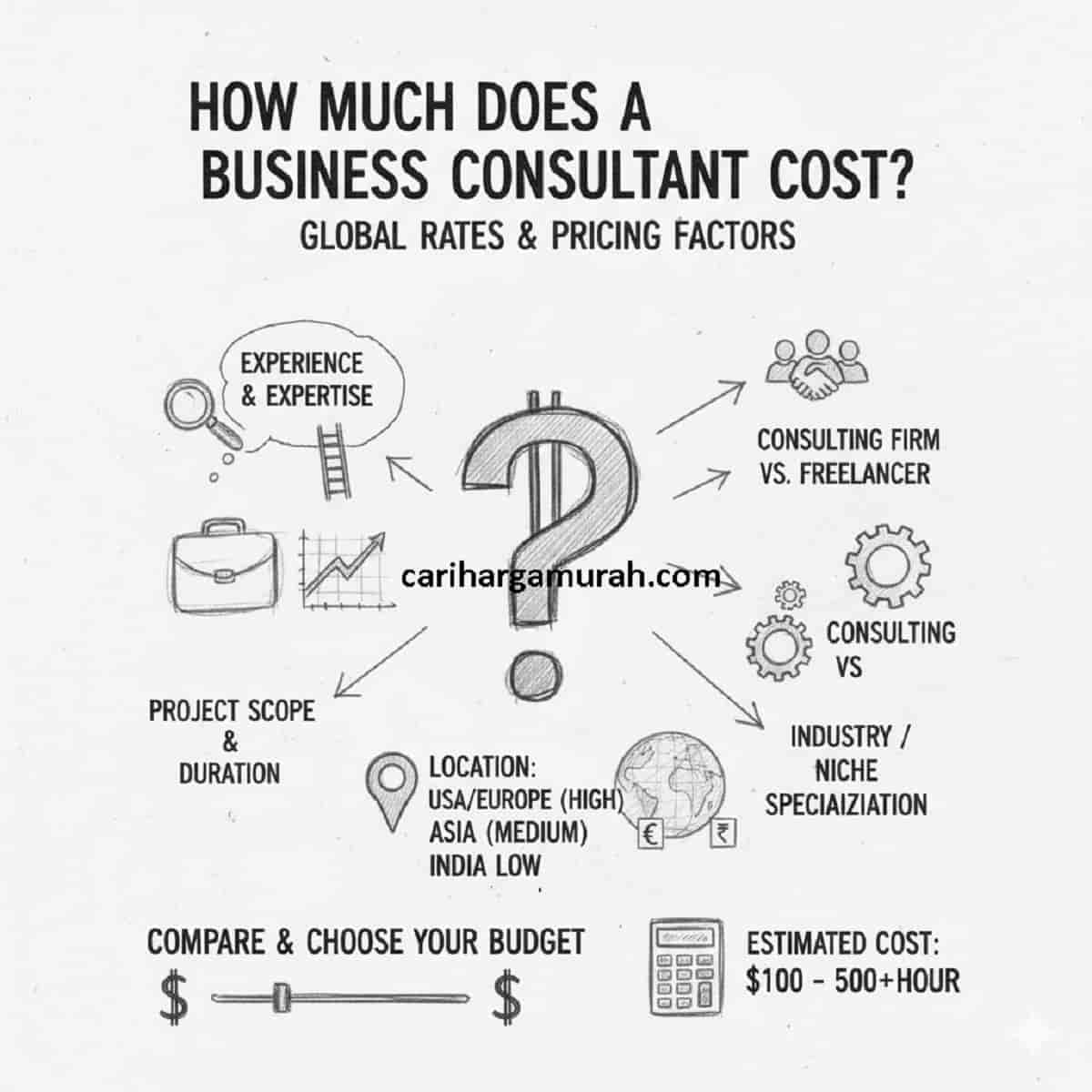
- $50–$100 per hour for junior or generalist consultants.
- $100–$250 per hour for experienced consultants.
- $250–$500+ per hour for highly specialized experts.
Rates under $50 per hour are rarely true consulting. They usually indicate outsourcing, template-based advice, or someone still learning at your expense. On the other end, very high hourly rates only make sense when the consultant’s expertise directly affects revenue, risk, or major decisions.
Hourly consulting works best when:
- You need clarity on a specific question.
- The task is limited and well-defined.
- You want to test a consultant before a larger project.
It works poorly when:
- The problem itself is unclear.
- You expect transformation, not advice.
- You need accountability for outcomes.
If a consultant bills hourly but cannot estimate how many hours a task will take, that is a warning sign.
2. Daily Rates
Many consultants prefer daily rates because they encourage deeper focus and reduce micromanagement. For small businesses, this often leads to better output per dollar compared to hourly billing.
Typical daily rates include:
- $500–$1,500 per day for general consulting.
- $2,000–$5,000 per day for specialized or senior consultants.
A daily rate usually includes preparation, meetings, analysis, and follow-up notes. This model works well for workshops, strategy sessions, operational reviews, or on-site problem-solving.
Daily rates make sense when:
- You need intensive input in a short time.
- Multiple stakeholders are involved.
- You want concrete decisions, not endless discussion.
Small business owners often underestimate how much progress can happen in one focused day with the right expert.
3. Monthly Retainers
A monthly retainer is common when a consultant acts as a long-term advisor rather than a one-time problem solver. This model gives you access to experience without the cost and risk of a full-time hire.
Typical monthly retainers for small businesses:
- $1,000–$3,000 per month for light advisory support.
- $3,000–$10,000 per month for active involvement.
- $10,000+ per month for high-level strategic roles.
Retainers usually include a set number of hours, regular meetings, and ongoing access. The value comes from continuity. The consultant understands your business context, not just isolated problems.
Retainers are ideal when:
- Your business is growing or changing.
- You need regular strategic input.
- You want a second brain for decisions.
They are a poor choice if you are not ready to implement advice consistently.
4. Project-Based Fees
For most small businesses, project-based pricing offers the best balance of cost control and results. You agree on deliverables upfront, and the consultant is paid to deliver outcomes, not hours.
Common project-based costs include:
- Business strategy or planning projects: $2,000–$10,000.
- Marketing or sales strategy projects: $3,000–$15,000.
- Financial analysis or restructuring: $5,000–$25,000.
- Technology or systems projects: $10,000–$50,000+.
Project pricing forces clarity. Both sides must define success before work begins. That alone eliminates many bad consulting engagements.
If a consultant resists fixed pricing for a clearly defined problem, assume the scope is unclear or the incentives are misaligned.
Why “Cheap” Consulting Usually Costs More
Small businesses often look for the lowest consultant price, especially early on. This is understandable, but it is usually a mistake.
Cheap consulting often leads to:
- Generic advice that doesn’t fit your business
- Incomplete analysis
- Poor implementation guidance
- Rework and wasted time
The real cost is not the consultant’s fee. It is the opportunity cost of acting on bad advice or delaying the right decision.
A good consultant should reduce confusion, not create more of it.
Cost vs Value: What You Are Really Paying For
You are not paying for a consultant’s time. You are paying for:
- Experience compressed into days or weeks.
- Mistakes you don’t have to make.
- Faster decision-making.
- Better use of your existing resources.
When evaluated this way, the question changes from “Is this expensive?” to “Is this problem expensive enough to justify expert help?”
That shift in thinking is what separates businesses that grow deliberately from those that stay stuck.
Consultant Costs by Industry
Not all consultants are priced the same, and the difference is not arbitrary. Industry specialization has a direct impact on cost because it affects how quickly a consultant can diagnose problems and deliver results.
A consultant who understands your industry shortcuts months of trial and error. That speed is what you are paying for. Below is a breakdown of common consulting categories and what small businesses should realistically expect to pay.
1. Business and Management Consultants
Business and management consultants focus on the core of how your company operates. They work on strategy, structure, growth planning, decision-making frameworks, and execution discipline.
Typical pricing for small businesses:
- Hourly rates: $100–$300.
- Project-based fees: $5,000–$30,000.
These consultants are most valuable when a business feels stuck despite working hard. If revenue is flat, operations are messy, or decisions feel reactive, this is the type of consultant you need.
Good business consultants ask uncomfortable questions. They challenge assumptions, not just optimize what already exists. If a consultant only confirms what you already believe, they are not worth their fee.
2. Marketing Consultants
Marketing consultants help small businesses clarify their positioning, attract the right customers, and convert attention into revenue. This includes branding, messaging, digital marketing strategy, and funnel design.
Typical pricing:
- Hourly rates: $75–$250.
- Monthly retainers: $1,500–$10,000.
This category has the widest quality gap. Many so-called marketing consultants are actually selling tools, ads, or content packages. Real marketing consulting starts with strategy, not tactics.
A strong marketing consultant will focus on:
- Target audience clarity.
- Value proposition.
- Channel prioritization.
- Measurable outcomes.
If the conversation starts with platforms instead of customers, you are likely overpaying.
3. Financial Consultants
Financial consultants deal with money, risk, and sustainability. They help small businesses understand cash flow, profitability, pricing, budgeting, and funding options.
Typical pricing:
- Hourly rates: $150–$400.
- Project-based fees: $5,000–$25,000.
These consultants often deliver some of the fastest ROI because they expose financial blind spots. Many small businesses are profitable on paper but fragile in reality.
Financial consulting is especially valuable when:
- Cash flow is inconsistent.
- Margins are unclear.
- You are preparing for investors or loans.
- Costs keep rising without clear reasons.
If you do not understand your numbers, you are already paying a hidden cost.
4. IT and Technology Consultants
Technology consultants help small businesses choose, implement, and optimize systems. This includes software selection, automation, cybersecurity, and infrastructure planning.
Typical pricing:
- Hourly rates: $100–$300.
- Project-based fees: $10,000–$50,000+.
Technology consulting is expensive because mistakes are expensive. Poor system decisions create long-term inefficiencies that compound over time.
Cheap IT consulting often leads to:
- Over-engineered systems.
- Vendor lock-in.
- Security risks.
- Costly rework.
A good technology consultant speaks business first, technology second. If they cannot explain why a system matters to revenue or efficiency, they are not solving the right problem.
5. Human Resources and Organizational Consultants
HR consultants focus on people systems: hiring, performance management, compensation structures, and organizational design.
Typical pricing:
- Hourly rates: $75–$200.
- Project-based fees: $3,000–$15,000.
Small businesses often delay HR consulting until problems appear. By then, turnover is high, roles are unclear, and productivity suffers.
HR consultants are most valuable when:
- Your team is growing quickly.
- Roles and responsibilities are unclear.
- Performance issues are recurring.
- Culture is becoming inconsistent.
People problems rarely fix themselves. They get more expensive with time.
6. Sales Consultants
Sales consultants help improve how a business generates revenue. This includes sales process design, pricing strategy, pipeline management, and sales training.
Typical pricing:
- Hourly rates: $100–$300.
- Project-based fees: $5,000–$25,000.
- Performance-based components in some cases.
Sales consulting should directly connect to revenue. If it does not, it is ineffective.
Be cautious with consultants who promise “guaranteed sales” without understanding your market, product, or sales cycle. Sales is a system, not a script.
7. Legal and Compliance Consultants
Legal consultants help small businesses manage contracts, regulations, and risk exposure.
Typical pricing:
- Hourly rates: $150–$500.
- Project-based fees: highly variable.
While expensive, legal consulting is often preventative. The cost of one legal mistake can exceed years of consulting fees.
Use legal consultants strategically, not reactively. Prevention is cheaper than litigation.
Why Industry Expertise Changes Everything
A generalist consultant may cost less, but they take longer to understand context. An industry specialist costs more upfront but delivers faster, clearer results.
For small businesses, speed matters. Every month spent experimenting is a month of opportunity lost.
Paying more for the right expertise is often cheaper than paying less for learning on the job.
Factors That Influence Consultant Pricing
Consultant pricing is not random, and it is not based on ego alone. Behind every consulting fee is a combination of risk, responsibility, and expected impact. Small businesses that understand these factors negotiate better and choose more wisely.
If you only compare prices without understanding what drives them, you will almost always make the wrong decision.
Below are the main factors that influence how much a consultant charges.
1. Level of Experience and Proven Track Record
Experience is the strongest driver of consulting fees. A consultant who has solved the same problem many times can diagnose issues faster and avoid common mistakes.
This is why two consultants offering “business strategy” can charge wildly different prices.
What you are paying for is not years on a résumé, but:
- Problems already solved.
- Patterns already recognized.
- Mistakes already paid for.
A consultant with a proven track record reduces uncertainty. That reduction in risk is valuable, especially for small businesses where one bad decision can hurt cash flow or momentum.
2. Specialization vs Generalization
Generalist consultants tend to charge less. Specialists charge more, and they should.
A consultant who focuses on one industry or problem area:
- Asks better questions.
- Needs less explanation.
- Delivers usable insights faster.
For small businesses, specialization often matters more than brand name. A niche consultant who understands your market can outperform a famous generalist who needs weeks to learn context.
Higher specialization equals higher fees, but also higher relevance.
3. Scope and Clarity of the Engagement
Unclear scope increases cost. This is not greed, it is risk pricing.
When a consultant cannot clearly define:
- The problem
- The deliverables
- The success criteria
They will protect themselves by charging more or billing hourly.
Well-defined projects cost less because expectations are aligned. Vague engagements almost always expand in time, complexity, and cost.
If your business cannot articulate what it needs, part of the consulting fee will be spent on discovery. That is unavoidable.
4. Urgency and Time Pressure
Urgent work costs more. Always.
If you need answers quickly, the consultant must:
- Reprioritize other clients.
- Work longer or more intensively.
- Deliver without extended exploration.
Speed has a price. Small businesses often create urgency through delay, then complain about premium fees.
Planning ahead is one of the simplest ways to reduce consulting costs.
5. Geographic Location and Market Rates
Location still affects pricing, though less than it used to.
Consultants based in:
- North America.
- Western Europe.
- Australia.
Generally charge higher rates due to cost of living and market expectations.
Remote consulting has opened access to global talent, but price differences still reflect experience, communication skills, and market exposure—not just geography.
Cheap does not always mean inefficient, but extreme price gaps require scrutiny.
6. Reputation, Demand, and Opportunity Cost
Highly sought-after consultants charge more because they can. Demand is a pricing factor whether businesses like it or not.
A consultant with a full pipeline must justify taking on new work. Higher fees compensate for:
- Opportunity cost.
- Limited availability.
- Reputation risk.
Reputation pricing is not always fair, but it is real. The key question is whether the consultant’s reputation aligns with your actual needs.
7. Risk and Responsibility Level
Consultants who influence high-stakes decisions charge more because the consequences are bigger.
Examples include:
- Financial restructuring.
- Investment readiness.
- Technology architecture.
- Compliance and legal risk.
When the downside of being wrong is severe, the cost of expertise rises. This is rational, not inflated pricing.
If a consultant’s advice can significantly harm or help your business, expect premium fees.
8. Deliverables vs Advisory-Only Work
Consultants who deliver concrete outputs often charge more than those offering pure advice.
Deliverables may include:
- Strategic documents.
- Financial models.
- System designs.
- Process frameworks.
These require additional effort, accountability, and revision. Advisory-only work is cheaper but places more responsibility on the business to execute.
Choose based on your internal capacity, not just price.
9. Client Readiness and Cooperation
This factor is rarely discussed, but it matters.
Consultants charge more when they expect:
- Poor communication.
- Slow decision-making.
- Resistance to change.
- Lack of data or clarity.
In other words, difficult clients cost more.
Prepared, decisive small businesses often receive better pricing and better results simply because they are easier to work with.
Why Pricing Transparency Matters
A professional consultant should be able to explain why they charge what they charge. Vague answers indicate weak positioning or misaligned incentives.
Price without explanation creates mistrust. Explanation without defensiveness builds confidence.
If you do not understand the fee, do not agree to it.
The Real Pricing Question Small Businesses Should Ask
The real question is not:
“How much does this consultant cost?”
It is:
“What is the cost of staying where we are?”
When framed correctly, consultant pricing becomes a strategic decision instead of an emotional one.
Is Hiring a Consultant Worth the Cost for a Small Business?
For most small business owners, this is the real question. Not how much a consultant costs, but whether the cost makes sense at all.
The uncomfortable truth is this: hiring a consultant is not automatically worth it. In many cases, it is unnecessary. In others, it is the smartest move a business can make. The difference lies in timing, expectations, and execution.
Consultants do not create success. They accelerate clarity. What you do with that clarity determines whether the investment pays off.
When Hiring a Consultant Is Worth the Cost
A consultant is worth the money when the cost of the problem is higher than the consulting fee.
This usually happens in a few specific situations.
1. You Are Stuck Despite Working Hard
If you are busy all the time but results are not improving, effort is no longer the issue. Perspective is.
A consultant brings:
- An external viewpoint.
- Pattern recognition from similar cases.
- The ability to challenge assumptions.
When internal effort no longer produces progress, outside insight often does.
2. You Are Facing a High-Stakes Decision
Some decisions are too expensive to get wrong.
Examples include:
- Entering a new market.
- Raising capital.
- Hiring senior leadership.
- Choosing core technology systems.
In these moments, paying for expertise is cheaper than paying for mistakes. The cost of reversing a bad decision often exceeds the consulting fee many times over.
3. Your Business Is Growing Faster Than Its Systems
Growth exposes weaknesses. Processes that worked at a small scale begin to break. Communication slows. Costs creep up.
A consultant helps design systems before chaos becomes permanent.
Growth without structure is not success. It is delayed failure.
4. You Need Speed, Not Trial and Error
Small businesses rarely have time to experiment endlessly. Every month of uncertainty is lost opportunity.
Consultants compress learning. They replace months of trial and error with informed direction.
If speed matters, consulting often pays for itself.
When Hiring a Consultant Is Not Worth the Cost
Just as important as knowing when to hire is knowing when not to.
1. You Expect the Consultant to “Fix” the Business
Consultants do not implement discipline, accountability, or execution. That responsibility stays with the business owner.
If you are looking for motivation or miracles, consulting will disappoint you.
2. You Are Not Ready to Act on Advice
Advice without execution is wasted money.
If you are:
- Indecisive
- Resistant to change
- Unwilling to allocate resources
Then even the best consultant cannot help you.
3. Your Problem Is Purely Operational
If the issue is simple execution, writing content, running ads, managing admin, hire a freelancer or employee instead. Consulting is not a substitute for doing the work.
4. You Are Only Comparing Prices
If cost is the only decision factor, you are not evaluating value. That almost always leads to poor outcomes.
Cheap consulting that leads nowhere is not cheap.
The Consultant as a Force Multiplier
The right consultant acts as a force multiplier. They improve how you think, decide, and allocate resources.
Their value compounds when:
- You apply lessons repeatedly.
- Systems outlast the engagement.
- Decisions improve long after they leave.
This is why experienced consultants can charge more. Their impact extends beyond the project timeline.
The Owner’s Role in Making Consulting Worth It
Consulting is a collaboration, not a transaction.
For the investment to make sense, business owners must:
- Be honest about problems.
- Share accurate data.
- Make decisions promptly.
- Commit to implementation.
The better the client, the better the outcome.
Measuring Whether the Consultant Was Worth It
Do not measure success by:
- Number of meetings.
- Length of reports.
- Complexity of frameworks.
Measure it by:
- Clearer decisions.
- Reduced uncertainty.
- Improved performance indicators.
- Faster execution.
If the consultant helped you move forward with confidence, the cost was justified.
A Hard Truth Small Businesses Need to Accept
Most small businesses wait too long to hire help. They try to solve structural problems with more effort instead of better thinking.
By the time they seek consulting, the problem has grown and so has the cost.
Used early and deliberately, consulting is a strategic advantage. Used late and emotionally, it becomes an emergency expense.
Is It Worth It?
Hiring a consultant is worth the cost when:
- The problem is expensive.
- The stakes are high.
- The business is ready to act.
It is not worth it when:
- You want shortcuts.
- You resist change.
- You expect someone else to care more than you do.
Consultants do not build businesses. Owners do.
Consultants simply help owners build them better.
Calculating ROI: How to Know If a Consultant Is Worth It
Return on investment is the only metric that truly matters when evaluating consulting. Everything else, credentials, presentation quality, confidence is secondary.
For small businesses, ROI is not about spreadsheets alone. It is about whether the consultant helped you make better decisions faster, with less risk and less waste.
If you cannot clearly explain the return, the investment was likely weak.
1. Start With the Cost of the Problem, Not the Cost of the Consultant
Most business owners make the mistake of starting with the consultant’s fee. That is the wrong reference point.
The correct starting point is the cost of the problem you are trying to solve.
Ask yourself:
- How much is this problem costing us every month?
- What happens if nothing changes in six or twelve months?
- What opportunities are we missing because of this issue?
If a problem costs your business $3,000 per month, paying $6,000 to solve it is not expensive, it is efficient.
2. Define What “Success” Actually Means
ROI cannot be calculated without a clear definition of success.
Before hiring a consultant, define outcomes such as:
- Increased revenue.
- Reduced operating costs.
- Improved conversion rates.
- Faster decision-making.
- Lower risk exposure.
Vague goals like “better strategy” or “more clarity” must be translated into business impact.
If success cannot be defined upfront, ROI will always feel disappointing.
Understand the Different Types of ROI
Not all returns are immediate or financial. Small businesses must recognize multiple forms of ROI.
1. Direct Financial ROI
This is the most obvious form:
- Revenue growth.
- Cost reduction.
- Margin improvement.
If a consultant directly influences numbers, calculating ROI is straightforward.
2. Time-Based ROI
Time is a limited resource for small business owners.
If a consultant:
- Shortens decision cycles.
- Eliminates trial and error.
- Reduces rework.
Then time saved should be valued realistically. Faster progress often leads to earlier revenue and reduced burnout.
3. Risk Reduction ROI
Some of the most valuable consulting outcomes are invisible.
Examples include:
- Avoiding legal issues.
- Preventing bad hires.
- Choosing scalable systems.
- Avoiding unprofitable expansion.
Risk avoided is still ROI, even if it never appears on a profit-and-loss statement.
Compare Cost to Impact, Not Effort
A common mistake is evaluating consultants based on how hard they seem to work.
Effort does not equal value.
A consultant who:
- Works fewer hours.
- Asks sharper questions.
- Reaches conclusions faster.
Can deliver higher ROI than one who produces long reports with little impact.
Judge outcomes, not activity.
Build Simple ROI Scenarios
You do not need complex models. Simple scenarios are enough.
For example:
- Consultant fee: $8,000.
- Monthly profit increase: $1,500.
- Payback period: ~5 months.
Anything beyond that is upside.
If the math does not make sense in simple terms, it will not improve with complexity.
Watch for False ROI Signals
Some consultants create the illusion of ROI without real impact.
Be cautious of:
- Overly complex frameworks.
- Vanity metrics.
- Improvements that cannot be sustained.
- Results that depend entirely on the consultant’s presence.
True ROI leaves your business stronger even after the engagement ends.
The Role of Implementation in ROI
Consultants provide direction. Businesses provide execution.
If results are weak, ask:
- Was the advice clear?
- Was it implemented fully?
- Were decisions delayed?
Poor implementation destroys ROI faster than poor advice.
When ROI Takes Time to Appear
Not all consulting delivers instant returns.
Strategic consulting often shows ROI through:
- Better future decisions.
- Stronger foundations.
- Avoided mistakes.
Short-term impatience often causes small businesses to undervalue long-term gains.
A Simple Test to Evaluate Consulting ROI
Ask yourself this question three months after the engagement ends:
“Would I make the same decisions today without this consultant?”
If the answer is no, the ROI was positive.
If the answer is yes, the consultant likely added little value.
Consulting ROI is not about perfection. It is about improvement.
A consultant is worth the cost when they help you:
- See the business more clearly.
- Decide more confidently.
- Act more effectively.
That clarity compounds over time.
And for a small business, compounding clarity is one of the most valuable assets you can buy.
Hidden Costs Small Businesses Often Miss
When small businesses think about consulting costs, they usually focus only on the consultant’s fee. That is a narrow view and an expensive one.
The real cost of consulting includes everything required to turn advice into results. Ignoring these hidden costs does not make them disappear. It simply makes the engagement feel more disappointing than it should.
Understanding these costs upfront helps small businesses plan realistically and avoid frustration.
1. Internal Time and Attention
The most underestimated cost is internal time.
Consulting requires:
- Meetings.
- Data collection.
- Decision-making.
- Follow-up discussions.
Every hour spent with a consultant is an hour not spent on daily operations. For business owners, this time is often the most valuable resource they have.
If leadership is distracted, unavailable, or unprepared, consulting progress slows and costs rise indirectly.
2. Implementation Effort
Consultants do not implement most recommendations. Your team does.
Hidden implementation costs may include:
- Process changes.
- Staff training.
- Documentation updates.
- Temporary productivity drops.
Advice that looks simple on paper often requires real effort to apply. If implementation capacity is limited, results will lag behind expectations.
3. Tools, Software, and Systems
Many consulting engagements reveal the need for better tools.
This may include:
- CRM systems.
- Accounting software.
- Project management tools.
- Marketing platforms.
These costs are not part of the consultant’s fee, but they are a direct consequence of the advice. Ignoring them makes ROI calculations unrealistic.
A good consultant flags these costs early. A bad one pretends they do not exist.
4. Change Management and Resistance
People resist change, even when change is necessary.
Hidden costs arise from:
- Pushback from staff.
- Learning curves.
- Temporary morale dips.
- Conflict during transition.
Small businesses often underestimate how much energy it takes to shift habits. Cultural friction slows execution and reduces the perceived value of consulting.
5. Opportunity Cost
Opportunity cost is what you give up by choosing one path over another.
Examples include:
- Delaying other initiatives.
- Postponing investments.
- Focusing on one problem while others wait.
Consulting always involves prioritization. If priorities are unclear, the cost of misaligned focus can outweigh the benefits.
6. Extended Timelines Due to Unclear Scope
When project scope is vague, timelines stretch.
This leads to:
- Additional meetings.
- Rework.
- Extra consulting hours.
- Decision fatigue.
What starts as a short engagement quietly becomes a longer, more expensive one.
Clear scope is not a formality, it is cost control.
7. Emotional and Cognitive Load
This cost is rarely acknowledged but very real.
Consulting forces business owners to:
- Confront uncomfortable truths.
- Make difficult decisions.
- Question long-held beliefs.
This mental effort can be draining. Some owners unconsciously resist progress, slowing outcomes and increasing frustration.
Why These Costs Are Not a Bad Thing
Hidden costs are not a sign that consulting is flawed. They are a sign that change is happening.
The problem is not that these costs exist. The problem is pretending they do not.
Businesses that account for hidden costs:
- Plan better.
- Execute faster.
- Experience higher ROI.
Those that ignore them blame consultants unfairly.
How to Manage Hidden Costs Effectively
Smart small businesses do three things:
- Ask consultants about downstream impacts.
- Allocate internal resources in advance.
- Set realistic timelines.
Consulting works best when treated as a transformation process, not a transaction.
If consulting feels harder than expected, that does not mean it is failing. It often means it is working.
The real failure is expecting change without paying the full price of implementation.
How to Avoid Overpaying for a Consultant
Overpaying for a consultant is not about paying a high fee. It is about paying for the wrong thing.
Small businesses often assume that expensive consultants are automatically better, or that cheaper ones are safer. Both assumptions are flawed. The real risk is misalignment between the problem, the consultant, and expectations.
Avoiding overpayment starts with discipline, not negotiation tricks.
1. Be Clear About the Problem Before Hiring Anyone
The fastest way to overpay is to hire a consultant before you understand your own problem.
If you cannot clearly explain:
- What is not working.
- Why it matters.
- What success looks like.
Then part of the consulting fee will be spent figuring this out. That may be necessary, but it should be a conscious decision.
Clarity upfront reduces cost later.
2. Demand Specific Deliverables, Not Vague Promises
Vague promises cost more in the long run.
Avoid engagements defined by:
- “Strategic alignment”.
- “Business transformation”.
- “High-level insights”.
Instead, ask for:
- Clear outputs.
- Defined timelines.
- Measurable outcomes.
If a consultant resists specificity, assume the value will be difficult to measure.
3. Choose Fixed Pricing When the Scope Is Clear
Hourly billing transfers risk to the client. Fixed pricing transfers risk to the consultant.
For small businesses, fixed pricing is usually safer when:
- The problem is well-defined.
- Deliverables are concrete.
- Timelines are reasonable.
This forces the consultant to work efficiently and focus on results, not hours.
4. Do Not Pay for Reputation Alone
A famous consultant is not automatically the right one.
Reputation often reflects:
- Past clients.
- Public visibility.
- Strong marketing.
What matters more is relevance.
A consultant who has solved your problem before is more valuable than one who is well-known but unfamiliar with your context.
Pay for experience that fits, not for branding.
5. Ask How Success Will Be Measured
If success cannot be measured, it cannot be priced fairly.
Before signing anything, ask:
- How will we know this worked?
- What will be different afterward?
- What happens if results fall short?
Consultants who welcome these questions are confident in their value. Those who avoid them are not.
6. Beware of Tool-Centered Consulting
Consultants who push tools early often overcharge indirectly.
If the solution is always:
- New software.
- Paid platforms.
- Proprietary frameworks.
Then the consulting fee may be just the beginning of the cost.
Tools should support strategy, not replace it.
7. Avoid Open-Ended Retainers Without Clear Purpose
Retainers can be valuable, but they are easy to abuse.
Avoid retainers that lack:
- Clear objectives.
- Defined access levels.
- Regular review points.
If you cannot explain why you are still paying a retainer after three months, you are likely overpaying.
8. Test Before You Commit
A short, paid diagnostic engagement is often the smartest move.
This allows you to:
- Evaluate working style.
- Test thinking quality.
- Assess communication fit.
Paying a small amount to avoid a large mistake is good business.
9. Trust Your Discomfort Signals
If something feels off, unclear pricing, evasive answers, pressure to sign, pay attention.
Consulting requires trust. Overpaying often starts when business owners ignore early warning signs.
The Real Reason Small Businesses Overpay
Most overpayment happens because owners:
- Feel insecure
- Want certainty
- Hope for shortcuts
Consultants do not remove responsibility. They sharpen it.
Paying more does not reduce your role. It increases it.
Never ask:
“How much does this consultant cost?”
Always ask:
“What problem is this consultant solving, and how expensive is that problem if it stays unsolved?”
When you think this way, overpaying becomes rare—and good consulting becomes obvious.
Freelancers vs Consultants: Know the Difference
Many small businesses overpay not because consultants are expensive, but because they hire the wrong type of help.
Freelancers and consultants are not interchangeable. Confusing them leads to wasted money, slow progress, and frustration on both sides. Understanding the difference is essential before you spend a single dollar.
What Freelancers Actually Do
Freelancers are executors.
They are hired to:
- Perform specific tasks.
- Follow clear instructions.
- Deliver defined outputs.
Examples include:
- Writing content.
- Designing graphics.
- Managing ads.
- Developing websites.
Freelancers are most effective when the problem is already defined and the solution is clear. They trade time and skill for payment.
Freelancers are not responsible for business outcomes. They are responsible for task completion.
What Consultants Actually Do
Consultants are problem-solvers.
They are hired to:
- Diagnose underlying issues.
- Design solutions.
- Guide decision-making.
- Reduce risk.
Consultants work upstream. They influence what should be done and why, not just how it gets done.
A consultant’s value lies in thinking, not execution.
The Cost Difference Explained
Freelancers typically cost less per hour. Consultants cost more because they carry more responsibility.
Freelancers are paid for:
- Time.
- Skill.
- Output.
Consultants are paid for:
- Judgment.
- Experience.
- Decision quality.
Paying consultant rates for freelancer work is wasteful. Paying freelancer rates for consulting-level thinking is unrealistic.
When a Freelancer Is the Right Choice
Hire a freelancer when:
- The task is clear.
- The outcome is known.
- You already have a strategy.
If you know what needs to be done and simply lack time or capacity, a freelancer is the efficient choice.
When a Consultant Is the Right Choice
Hire a consultant when:
- You are unsure what to do.
- Results are inconsistent.
- The problem keeps repeating.
- Decisions feel risky.
Consultants bring clarity where confusion exists. That clarity saves money in the long run.
The Most Expensive Mistake Small Businesses Make
The most expensive mistake is using freelancers to solve strategic problems.
This often looks like:
- Hiring marketers without positioning.
- Building systems without process design.
- Running ads without understanding customers.
The result is activity without progress.
Using Both Strategically
The smartest small businesses use consultants and freelancers together.
A common pattern:
- Consultant defines the strategy.
- Freelancer executes the plan.
- Owner manages outcomes.
This combination maximizes value and minimizes cost.
Why Misalignment Costs More Than Fees
Misalignment leads to:
- Rework.
- Conflicting directions.
- Delayed decisions.
- Frustration.
None of these show up on an invoice, but all of them cost money.
Freelancers help you move faster. Consultants help you move in the right direction.
Speed without direction is expensive. Direction without execution is useless.
Knowing the difference is not optional. It is a financial decision.
When Should a Small Business Hire Its First Consultant?
Most small businesses hire their first consultant too late.
They wait until problems become painful, cash flow is tight, growth stalls, or internal chaos spreads. At that point, consulting feels expensive because the cost of delay has already accumulated.
The right time to hire a consultant is not when the business is failing. It is when the business is at a decision point.
1. Hire a Consultant Before You Scale
Scaling amplifies everything good and bad.
If your:
- Processes are unclear.
- Roles are overlapping.
- Numbers are poorly tracked.
Scaling will not fix these issues. It will magnify them.
Hiring a consultant before growth helps ensure that systems, structure, and strategy can handle increased complexity.
2. Hire a Consultant Before Making Irreversible Decisions
Some decisions are easy to undo. Others are not.
Examples include:
- Choosing core technology platforms.
- Entering long-term contracts.
- Expanding into new markets.
- Hiring senior leadership.
These decisions shape your business for years. Paying for experienced guidance at this stage is often cheaper than correcting mistakes later.
3. Hire a Consultant After Repeated Failed Attempts
If you have tried to fix the same problem multiple times and failed, effort is no longer the solution.
Repeated failure signals:
- Blind spots.
- Misdiagnosis.
- Lack of external perspective.
A consultant can identify patterns you are too close to see.
4. Hire a Consultant When Growth Feels Chaotic
Chaos is not a sign of success. It is a sign of strain.
Common signals include:
- Constant firefighting.
- Decision bottlenecks.
- Conflicting priorities.
- Team confusion.
Consultants help replace chaos with structure before burnout sets in.
5. Hire a Consultant When You Need Speed and Focus
If you need clarity quickly, consulting is efficient.
Rather than spending months experimenting, a consultant can:
- Narrow options.
- Clarify trade-offs.
- Accelerate decision-making.
Time saved often justifies the cost alone.
When It Is Too Early to Hire a Consultant
Consulting is not always the answer.
It is too early if:
- You have not validated your business idea.
- Cash flow is extremely fragile.
- You are unwilling to change direction.
In early survival stages, execution matters more than optimization.
The First Consultant Sets the Tone
Your first consulting experience shapes how you view outside help.
Choose carefully:
- Start with a focused engagement.
- Define clear outcomes.
- Evaluate fit, not just expertise.
A good first experience builds confidence. A bad one creates skepticism that can limit future growth.
A Simple Rule of Thumb
If the cost of making the wrong decision is higher than the cost of consulting, it is time to hire help.
This rule rarely fails.
The right time to hire a consultant is when:
- Decisions matter
- Complexity increases
- Clarity is missing
Waiting until things break is not frugal. It is expensive.
Smart small businesses hire consultants early, deliberately, and with clear intent.
Final Thoughts
“How much does a consultant cost for a small business?” is the wrong question.
The right question is:
What problem is expensive enough that expert help makes sense?
A $5,000 consultant who prevents a $100,000 mistake is cheap.
A $50,000 consultant who delivers nothing is expensive.
Small business owners who understand this stop fearing consultant fees and start using consultants as strategic tools.
If you treat consulting as an expense, you will resent the cost.
If you treat consulting as an investment, you will demand results.
And that mindset makes all the difference.
Frequently Asked Questions (FAQs)
1. Can a small business negotiate consultant fees?
Yes, but negotiation should focus on scope, not just price. Reducing deliverables, shortening timelines, or limiting access often makes more sense than asking for a discount. Consultants are more open to adjusting what they deliver than lowering their perceived value.
2. Should small businesses choose local consultants or remote ones?
Location matters less than relevance. A remote consultant with deep experience in your industry can deliver more value than a local consultant who lacks context. The key factor is communication quality and familiarity with your market, not physical proximity.
3. Is it better to hire an individual consultant or a consulting firm?
For small businesses, individual consultants often provide better value. They are cheaper, more flexible, and directly involved in the work. Consulting firms make sense when the project requires multiple specialists or heavy execution support.
4. How long does a typical consulting engagement last for small businesses?
Most small business consulting engagements last between four weeks and three months. Anything shorter risks superficial insight. Anything much longer should have clear milestones and measurable outcomes to justify the ongoing cost.
5. Do consultants require contracts, and what should small businesses look for?
Professional consultants usually require contracts. Small businesses should look for clear scope definitions, payment terms, confidentiality clauses, and exit conditions. Avoid contracts that lock you into long commitments without review points.
6. Can consultants work part-time with small businesses?
Yes. Many consultants work part-time or on a fractional basis, especially for strategy, finance, or leadership roles. Fractional consulting allows small businesses to access senior expertise without full-time costs.
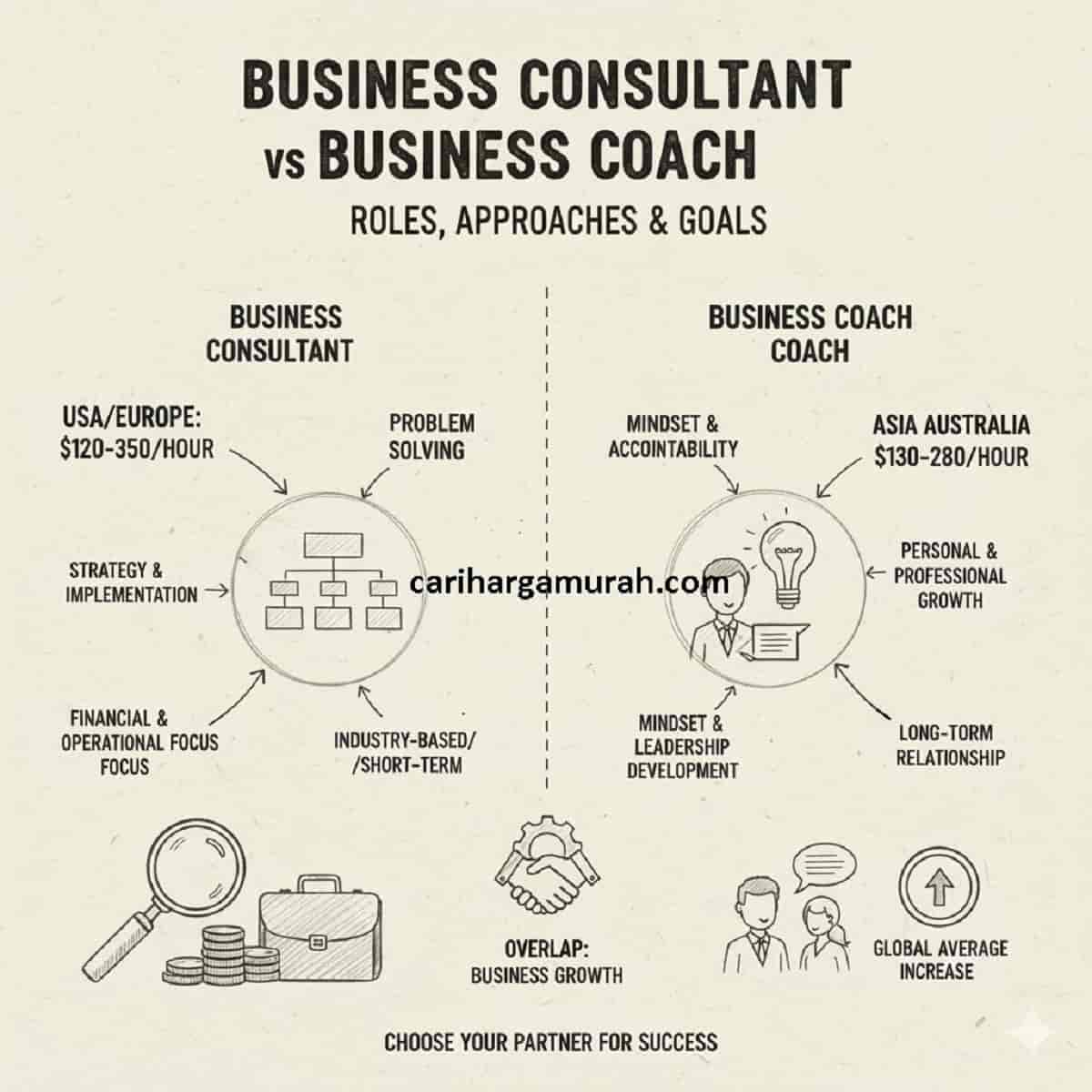
7. What is the difference between a consultant and a business coach?
A consultant provides diagnosis and solutions. A coach focuses on mindset, accountability, and personal development. If you need answers, hire a consultant. If you need motivation or behavioral change, a coach may be more appropriate.
8. Are performance-based consulting fees a good idea?
They can be, but they require clear metrics and trust. Performance-based fees work best in sales or revenue-related engagements. Be cautious if the consultant controls factors outside their influence, as this can distort incentives.
9. Should small businesses hire consultants during economic uncertainty?
Often yes, but selectively. During uncertainty, consulting focused on cash flow, risk reduction, and operational efficiency tends to deliver high value. Growth-focused consulting may be better delayed until conditions stabilize.
10. How do small businesses verify a consultant’s credibility?
Ask for specific examples, not testimonials. A credible consultant can explain past challenges, decisions made, and lessons learned. Generic success stories without detail are a red flag.
11. Can consulting replace hiring employees?
No. Consulting is not a substitute for building internal capability. Consultants are temporary accelerators, not long-term operators. Use them to design systems and strategies, then internalize execution.
12. What is the biggest mistake small businesses make with consultants?
Expecting certainty. Consultants reduce uncertainty; they do not eliminate it. Businesses that expect guaranteed outcomes often misuse advice or avoid necessary trade-offs.
13. How often should a small business rehire a consultant?
Only when a new problem or decision arises. Rehiring out of habit leads to dependency. The goal of good consulting is independence, not permanent reliance.