Business Consultant vs Business Coach: Cost Comparison
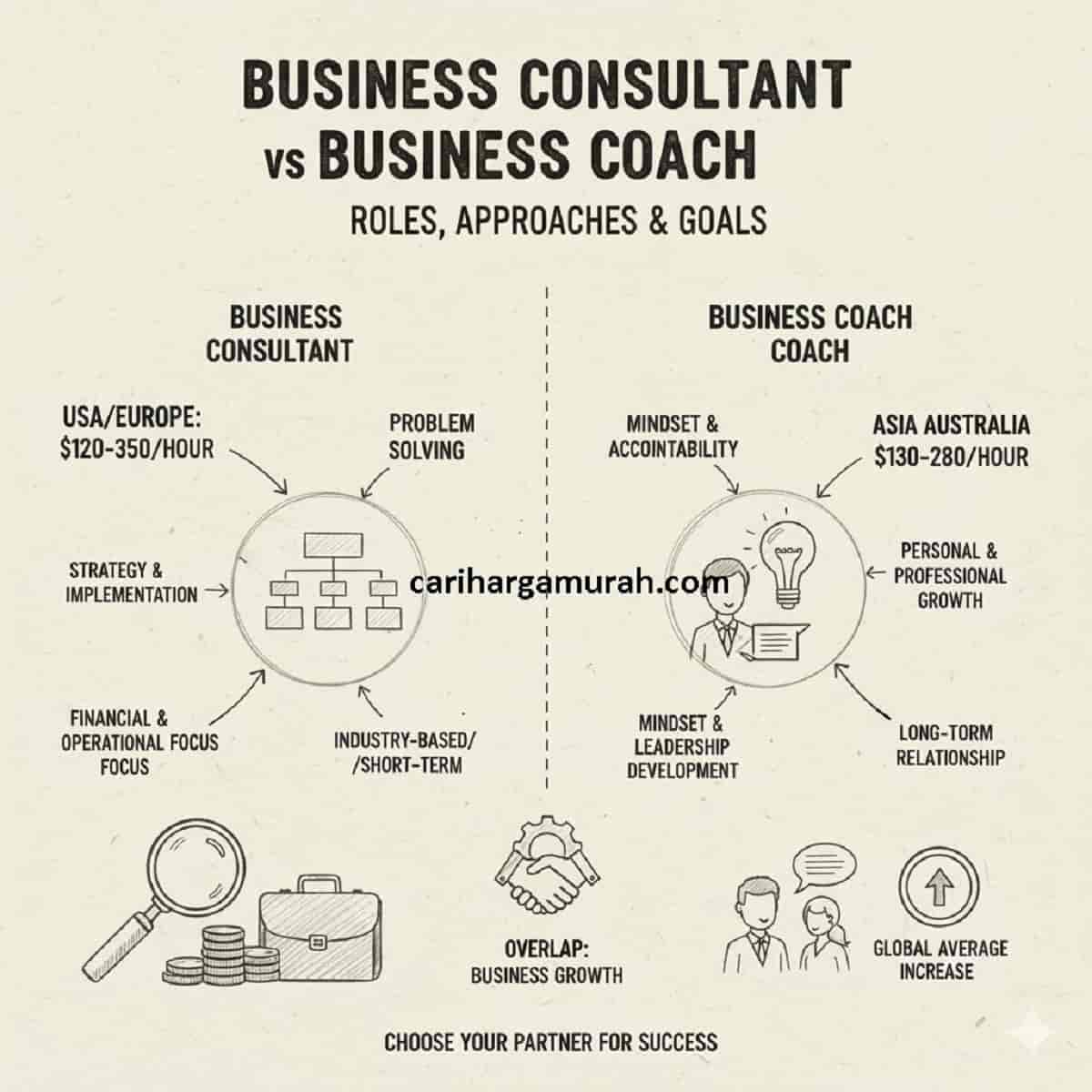
In today’s global business environment, entrepreneurs, executives, and business owners frequently face a critical decision: Should they hire a business consultant or a business coach?
Both professionals aim to improve business performance, yet they differ significantly in approach, objectives, engagement models, and most importantly cost structure.
This article provides a comprehensive international comparison of business consultants vs business coaches, with a strong focus on cost comparison, value delivered, and real-world use cases. If you are deciding where to invest your money, this guide will help you avoid expensive mistakes.
What Is a Business Consultant?
A business consultant is a professional hired to solve specific business problems by delivering expert analysis, structured recommendations, and actionable solutions. Consultants are typically brought in when a company needs clarity, speed, and technical expertise.
Common areas where business consultants operate include:
- Business strategy and growth planning
- Operational efficiency and process optimization
- Financial restructuring and profitability improvement
- Marketing and sales strategy
- Digital transformation
- Market entry and expansion
The defining characteristic of a consultant is this:
They diagnose the problem and tell you what to do.
Their work usually results in tangible deliverables such as reports, frameworks, financial models, implementation roadmaps, or operating systems.
What Is a Business Coach?
A business coach focuses on people rather than systems. Instead of fixing business problems directly, coaches help business owners, founders, and executives improve their thinking, leadership, decision-making, and execution discipline.
Business coaching typically covers:
- Leadership development
- Strategic thinking and clarity
- Communication and influence
- Personal productivity and habits
- Confidence and mindset
- Long-term vision alignment
A coach does not give direct instructions in most cases. Instead, they use structured conversations, questions, and accountability frameworks to help clients discover their own answers.

In simple terms:
Consultants fix the business. Coaches develop the leader running the business.
High-Level Comparison: Consultant vs Coach
| Aspect | Business Consultant | Business Coach |
|---|---|---|
| Primary Focus | Business problems | People and leadership |
| Output | Strategies, systems, reports | Personal growth and clarity |
| Engagement Style | Project-based | Ongoing relationship |
| Methodology | Analysis and execution | Dialogue and reflection |
| Best For | Technical or operational issues | Mindset and leadership challenges |
Understanding Cost Structures
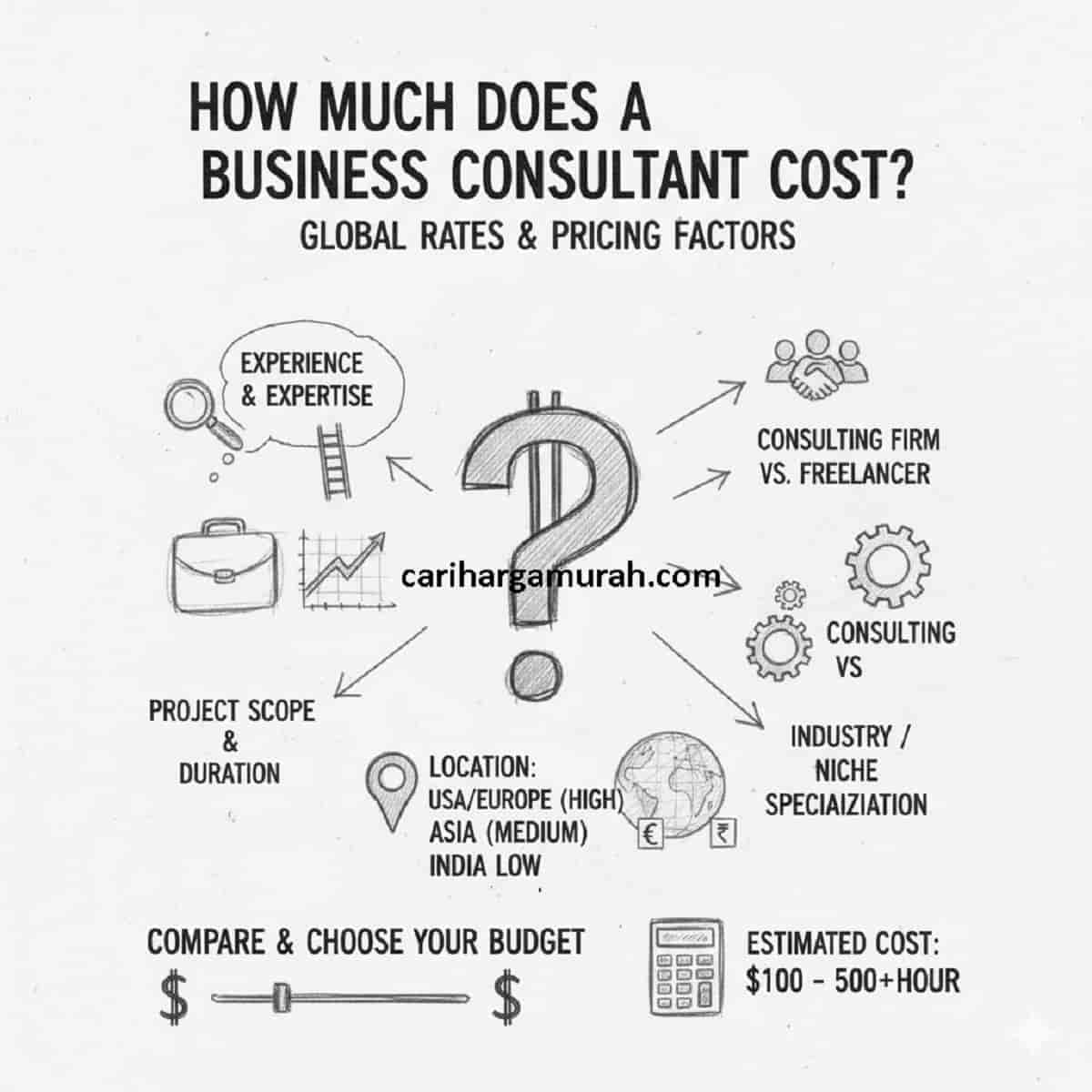
Before diving into numbers, it is critical to understand why costs vary so widely across countries and providers. Pricing is influenced by:
- Geographic location – Consultants in New York, London, or Zurich charge significantly more than those in Southeast Asia or Eastern Europe.
- Experience level – Senior professionals with proven results command premium fees.
- Scope of work – Strategy projects cost more than advisory calls.
- Engagement length – Long-term contracts often reduce effective hourly rates.
Now let’s talk real numbers.
Business Consultant Costs: International Benchmarks
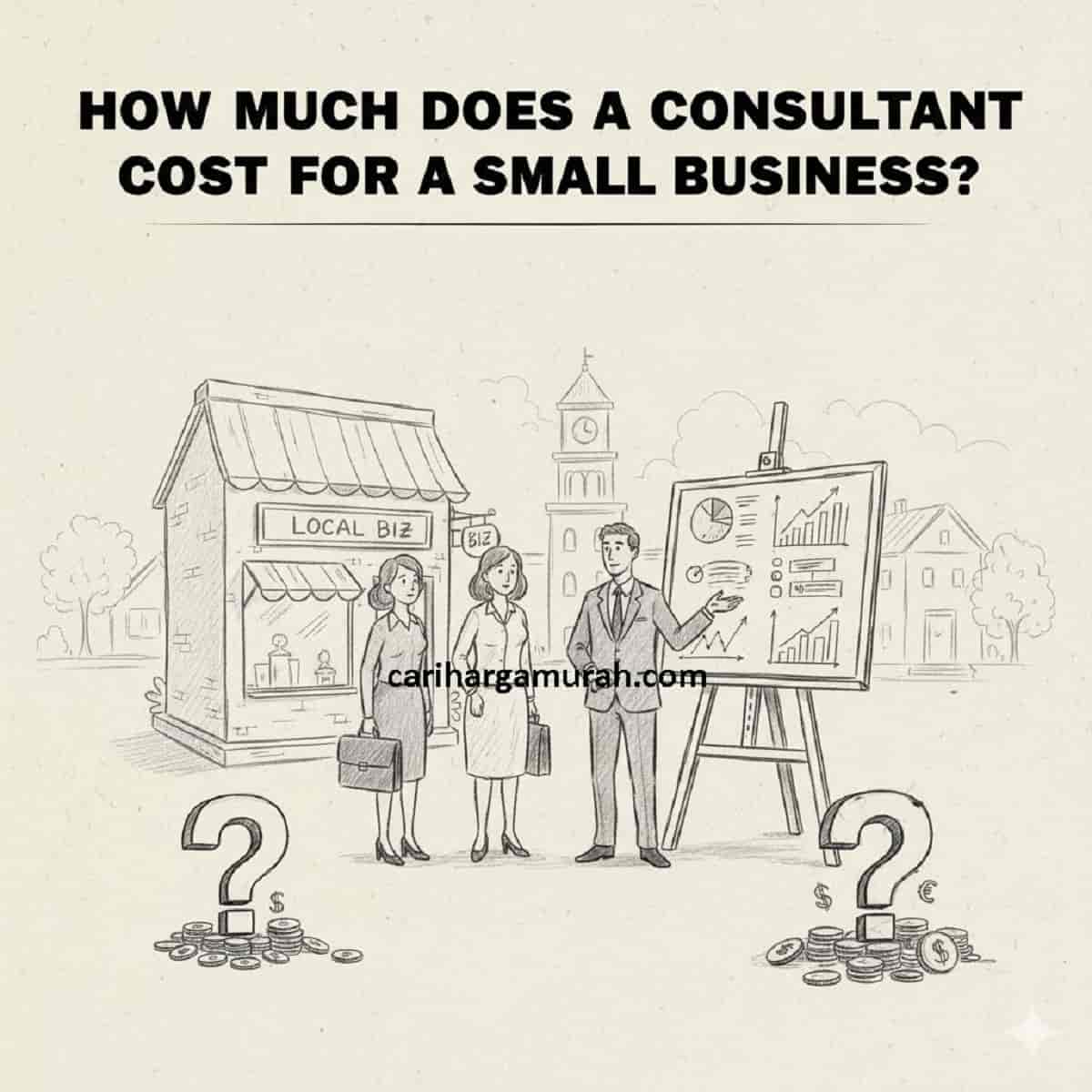
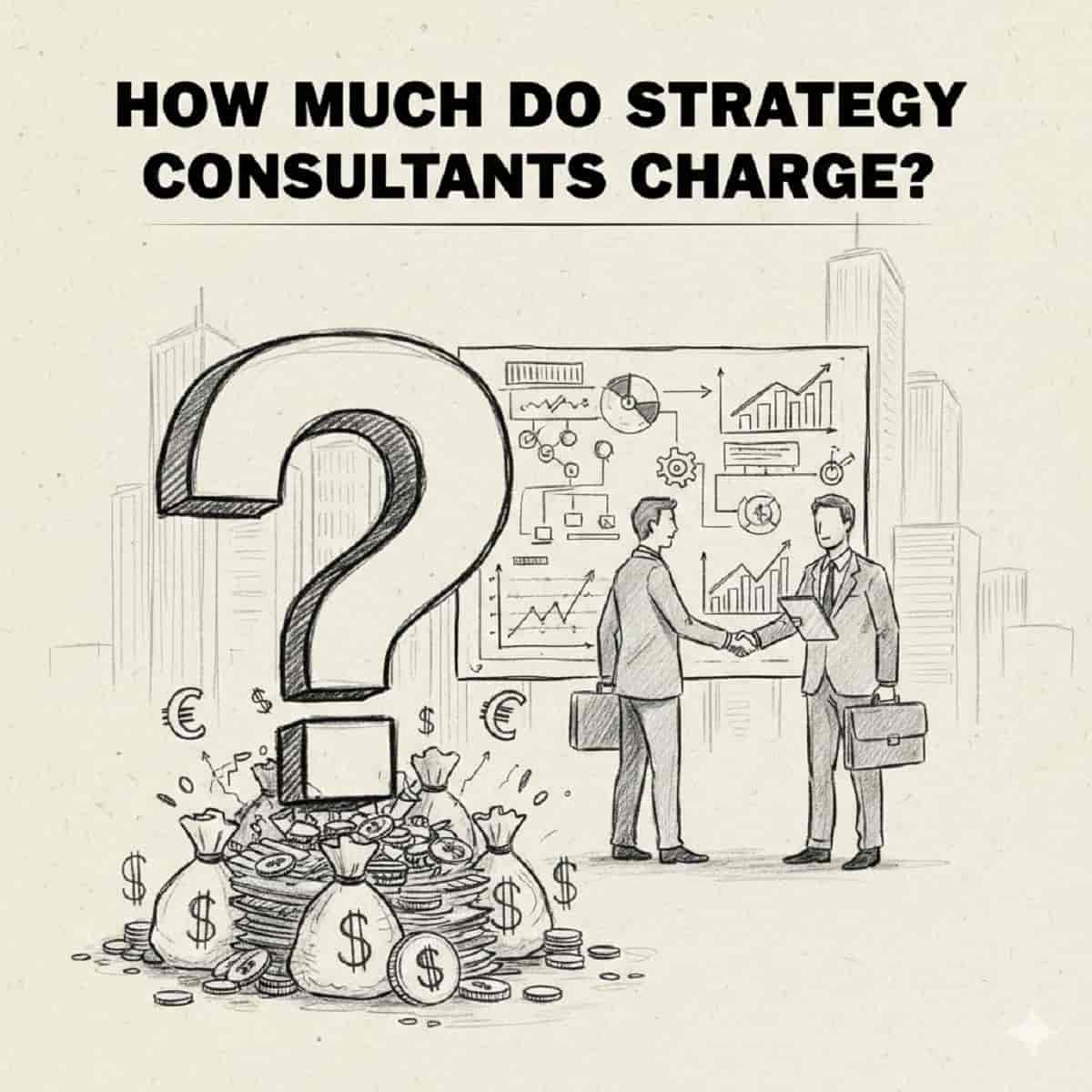
Hiring a business consultant is a strategic investment, not a routine expense. To invest wisely, you must understand how consulting fees are structured globally, what drives those costs, and most importantly what you actually receive at each pricing level.
This section breaks down consultant costs by experience level, service type, engagement duration, and geographic location, giving you a realistic international benchmark.
1. Entry-Level Business Consultants
Who they are?
Entry-level consultants typically have 1–5 years of experience. They often work independently, in small consulting firms, or within regional agencies, especially in markets with moderate cost of living.
Typical clients
- Early-stage startups.
- Small and medium-sized businesses.
- Short-term projects with well-defined scope.
Common services
- Basic business audits.
- Introductory market research.
- Simple digital marketing recommendations.
- Minor internal process improvements.
Average costs
- Hourly rate: USD 50 – USD 150.
- Project-based fees: USD 1,000 – USD 10,000.
- Monthly retainers: USD 1,500 – USD 5,000.
What you get at this price
- Initial diagnostic based on available data.
- One or two solution options.
- A concise written report.
- Limited follow-up sessions.
Pros and cons
- ✔ Affordable and accessible.
- ✔ Suitable for clear, narrow problems.
- ✘ Limited experience with complex challenges.
- ✘ Smaller professional network and resources.
Example case
An early-stage edtech startup needs a three-month marketing channel strategy. They hire a junior consultant for two weeks at a total cost of USD 3,000, receiving a practical marketing roadmap for internal execution.
2. Mid-Level Business Consultants
Who they are?
Mid-level consultants usually have 5–15 years of experience. Many come from reputable consulting firms, specialize in specific industries, or have a strong track record helping mid-sized companies scale.
Typical clients
- Mid-sized companies.
- Scaling startups.
- Organizations requiring cross-functional improvements.
Common services
- Growth and expansion strategies.
- Organizational structure analysis.
- CRM or ERP system recommendations.
- Operational efficiency optimization.
Average costs
- Hourly rate: USD 150 – USD 400.
- Project-based fees: USD 10,000 – USD 50,000.
- Monthly retainers: USD 5,000 – USD 20,000.
What you get at this price
- Workshops with leadership or operational teams.
- Performance and data analysis.
- Structured strategic frameworks.
- Implementation-ready documentation.
Why the higher cost?
Mid-level consultants bring industry context and execution experience, not just theory. They know which approaches fail in the real world and how to adapt strategies to organizational realities.
Pros and cons
- ✔ Strong balance between cost and value.
- ✔ Capable of handling organizational change.
- ✘ May still require senior oversight for highly complex cases.
Example case
A mid-sized manufacturing company wants to reduce production lead time. A mid-level consultant is hired for three months at USD 30,000, delivering workflow redesigns, KPI mapping, and bottleneck resolution.
3. Senior / Top-Tier Business Consultants
Who they are?
Senior consultants typically have 15+ years of experience. Many are former partners or leaders from global firms such as the Big Four, McKinsey, BCG, or Bain, or run elite boutique consultancies.
Typical clients
- Large enterprises.
- Conglomerates.
- Multinational corporations.
- High-risk or high-impact transformations.
Common services
- Enterprise-wide business transformation.
- Merger and acquisition advisory.
- Large-scale change management.
- End-to-end digital transformation.
Average costs
- Hourly rate: USD 400 – USD 1,000+.
- Project-based fees: USD 50,000 – USD 300,000+.
- Monthly retainers: USD 20,000 – USD 100,000+.
What you get at this price
- Multidisciplinary consulting teams.
- Advanced risk and scenario analysis.
- Detailed transformation roadmaps with KPIs and OKRs.
- Oversight through early implementation stages.
Why are senior consultants so expensive?
At this level, you are not paying for analysis, you are paying for judgment, credibility, and risk reduction. These consultants operate where mistakes can cost millions, and their experience functions as insurance against strategic failure.
Pros and cons
- ✔ Comprehensive, high-impact solutions.
- ✔ Trusted for critical decisions.
- ✘ Extremely expensive.
- ✘ Often unnecessary for smaller or moderately complex businesses.
Example case
A global corporation implements an ERP system across seven countries. A senior consulting team leads the project for six months at a cost exceeding USD 250,000, covering assessment, execution oversight, and executive training.
Regional Cost Variations: Geography Matters
One of the most overlooked factors in consulting fees is geographic location. Consultants based in global financial hubs typically charge significantly more than those in emerging markets.
Typical global patterns
- North America & Western Europe: Highest fees; often 2–3× Southeast Asian rates
- Southeast Asia & South Asia: Competitive pricing with strong value, especially for operational and digital consulting
- Eastern Europe & Africa: Lower average costs with strong niche expertise
- Remote Consultants: Increasingly popular; often reduce costs without sacrificing quality when scope is clear
What You’re Actually Paying For
Understanding the number is meaningless unless you understand the value behind it.
- Entry-Level: Diagnosis and basic recommendations
- Mid-Level: Diagnosis, strategy, and early implementation
- Senior-Level: Enterprise-wide transformation and risk management
Current Global Pricing Trends
Several important trends are shaping consulting costs worldwide:
- Hybrid engagement models. A mix of remote and on-site work reduces travel costs while maintaining effectiveness.
- Value-based pricing. More consultants price based on business impact rather than billable hours.
- Retainer + performance fees. Especially common in large engagements, aligning consultant incentives with results.
High fees do not guarantee high value. It is far better to hire the right consultant with a clearly defined scope than to pay premium prices for a famous name with vague deliverables.
Business Coach Costs: International Benchmarks
Hiring a business coach is a strategic choice focused on developing leadership, decision-making, mindset, and personal performance. In contrast to consultants, who deliver solutions, coaches help you become better at solving problems yourself. Because of this, costs are structured differently, often tied to session frequency, program length, and coach expertise.
This section breaks down international pricing benchmarks for business coaching, clarifies what you can expect at each level, and shows how location, certification, and coaching niche influence fees.
1. Emerging / Junior Business Coaches
Who they are?
Emerging business coaches typically have 1–5 years of coaching experience. Many come from corporate backgrounds or psychology/leadership training but are still building their coaching portfolio.
Typical clients
- First-time founders.
- Emerging entrepreneurs.
- Professionals transitioning into leadership.
Common focuses
- Time management and productivity.
- Goal-setting and prioritization.
- Confidence and communication basics.
- Early-stage leadership skills.
Typical pricing
- Per session (60 minutes): USD 75 – USD 200.
- Monthly coaching packages: USD 300 – USD 1,000.
- 3-month programs: USD 1,000 – USD 3,000.
What you get
- Weekly or biweekly coaching calls.
- Goal-setting frameworks.
- Basic accountability and progress tracking.
- Email support between sessions (often limited).
Pros
- Affordable entry point for coaching.
- Good for early-stage personal development.
- Flexible arrangements.
Cons
- Limited track record.
- May not handle complex leadership or scaling challenges.
Example scenario
A tech startup founder struggling with prioritization and team communication signs up for a 3-month coaching program at USD 2,000, gaining clarity on goals and stronger execution habits.
2. Mid-Level Business Coaches
Who they are?
Mid-level coaches usually bring 5–10 years of combined professional and coaching experience, often with niche expertise (e.g., leadership, scaling businesses, transitions).
Typical clients
- Mid-level executives.
- Startup founders scaling to Series A/B.
- Small business owners with growth challenges.
Common focuses
- Leadership development.
- Strategic thinking and decision-making.
- Team leadership and delegation.
- Communication and conflict management.
Typical pricing
- Per session: USD 200 – USD 500.
- Monthly packages: USD 1,000 – USD 3,000.
- 6–12 month programs: USD 6,000 – USD 25,000.
What you get
- Regular 60–90 minute coaching sessions.
- Customized development plans.
- Tools for conflict resolution and performance improvement.
- Feedback loops and mid-program check-ins.
Pros
- Balanced cost vs impact.
- Focus on long-term behavior change.
- More structured programs.
Cons
- Requires commitment.
- Results depend on client effort as much as coach quality.
Example scenario
A CEO of a scaling company engages a mid-level coach for 9 months at USD 18,000, focusing on leadership gaps and team development. Over time, the CEO builds stronger delegation skills and improves executive alignment.
3. Executive / Master Coaches
Who they are?
Executive or master coaches have 10+ years of coaching experience, often with certifications such as ICF PCC/MCC or similar global credentials. Many have corporate leadership backgrounds and work with C-suite executives, boards, and elite founders.
Typical clients
- Senior executives.
- Board members and global leaders.
- High-growth founders with scaling challenges.
Common focuses
- Strategic leadership excellence.
- Emotional intelligence and resilience.
- Board communication and stakeholder alignment.
- Career legacy and succession planning.
Typical pricing
- Per session: USD 500 – USD 2,500+.
- Annual programs: USD 25,000 – USD 100,000+.
- Retainer + performance model: Varies by coach but often includes bonus tied to milestones.
What you get
- Highly personalized coaching.
- Access to senior-level frameworks.
- Expanded accountability systems.
- Often includes assessments (e.g., 360 feedback, personality profiling).
Pros
- Deep transformation outcomes.
- Proven frameworks for elite leaders.
- High credibility and trust.
Cons
- Very high cost.
- Requires strong commitment and time investment.
Example scenario
A multinational company’s COO signs a 12-month executive coaching plan at USD 70,000, focusing on strategic influence, cross-cultural leadership, and executive presence. The program includes assessments, quarterly retreats, and ongoing feedback loops.
Global Pricing Variations: Geography & Delivery Mode
Just like consulting fees, coaching rates vary by location, market demand, and delivery method.
Regional patterns
- North America & Western Europe: Highest pricing due to mature coaching markets and certification norms.
- Asia Pacific & Middle East: Rapidly growing demand; rates competitive but rising.
- Emerging markets (Africa, Southeast Asia, Eastern Europe): Lower average fees, often with strong value, particularly for remote coaching.
- Hybrid & Online Coaching: Remote sessions reduce cost but can match in-person effectiveness when scope is clear.
Delivery modes affecting fees
- One-on-one coaching is the most expensive due to personalization.
- Group coaching cohorts typically cost less per person.
- Workshops or retreats add value but increase total program cost.
What You’re Actually Paying For
Understanding cost bands is only useful if you know what they represent in terms of value delivered:
Emerging coaches deliver:
- Fundamental clarity.
- Habit formation.
- Early leadership fundamentals.
Mid-level coaches deliver:
- Strategic leadership habits.
- Conflict management and communication clarity.
- Performance coaching embedded in long-term development.
Executive coaches deliver:
- High-stakes leadership transformation.
- Board and investor-level communication excellence.
- Self-mastery and influence shifts.
Pricing Trends in the Coaching Industry
Several global trends are shaping how coaching is priced and delivered:
- Outcome-based pricing: Increasingly common where coaches align fees with measurable performance milestones.
- Hybrid delivery models: Coaches combine online sessions with in-person workshops to maximize impact and flexibility.
- Certification premium: Coaches with recognized international credentials command higher rates due to perceived credibility.
- Subscription-style access: Some coaches offer ongoing monthly subscriptions with access to resources, community, and periodic check-ins.
Coaching is not an expense, it’s an investment. But like all investments, ROI depends on clarity, commitment, and alignment:
- Define specific goals before hiring a coach.
- Demand a structured engagement plan (not casual check-ins).
- Evaluate coaches based on track record and testimonials, not just price.
- Be honest about your own readiness to change.
Spending less can work if you commit deeply. Spending more doesn’t help if you don’t act.
International Coaching Cost Summary
| Coaching Tier | Typical Per-Session Cost | Monthly Package | Long-Term Program |
|---|---|---|---|
| Emerging | USD 75 – USD 200 | USD 300 – USD 1,000 | USD 1,000 – USD 3,000 |
| Mid-Level | USD 200 – USD 500 | USD 1,000 – USD 3,000 | USD 6,000 – USD 25,000 |
| Executive | USD 500 – USD 2,500+ | USD 3,000 – USD 10,000+ | USD 25,000 – USD 100,000+ |
Real-World Cost Comparison Scenarios
Case Study 1: Technology Startup
Need:
Validate business model and go-to-market strategy.
- Consultant option:
Mid-level consultant, 6-week project → USD 15,000
Deliverables include market analysis, pricing strategy, and launch roadmap. - Coach option:
Business coach, 3 months → USD 8,000
Focus on founder decision-making and strategic clarity.
Conclusion:
Consultants provide faster execution. Coaches build better founders.
Case Study 2: Mid-Sized Retail Company
Need:
Operational improvement and leadership development.
- Consultant option:
Senior consultant, 4 months → USD 75,000 - Coach option:
Executive coaching for leadership team, 8 months → USD 30,000
Best solution:
Use both. Systems fail without strong leaders, and leaders fail without strong systems.
Which One Delivers Better Value?
The question most business owners ask is not “Which one is cheaper?”
The real question is “Which one creates the highest return on my time, money, and attention?”
Business consultants and business coaches deliver value in very different ways, and choosing the wrong one often leads to wasted budgets, frustration, and slow progress. Let’s break this down clearly.
Value Definition: Consultant vs Coach
Before comparing value, we must define what “value” actually means in each context.
- Business Consultant value = Speed, expertise, and direct problem resolution
- Business Coach value = Long-term capability, leadership leverage, and decision quality
If you judge both using the same metric, you will make the wrong choice.
When a Business Consultant Delivers Better Value
A business consultant delivers superior value when execution speed and technical accuracy matter more than personal development.
Consultants create high value when:
- The problem is clearly defined
Examples:- Sales conversion is dropping
- Costs are too high
- Operations are inefficient
- Market entry failed
- The cost of delay is expensive
Every month without a solution means lost revenue, market share, or investor confidence. - You lack internal expertise
Hiring and training internally would take longer and cost more than hiring an expert. - You need deliverables, not discussions
You want dashboards, systems, playbooks, pricing models, or workflows—not mindset conversations.
Value equation for consultants:
Higher upfront cost → Faster clarity → Immediate business impact
Example:
A company losing USD 100,000 per month due to operational inefficiency hires a consultant for USD 30,000. If the consultant fixes the issue within 60 days, the ROI is obvious and immediate.
Strong opinion:
If your business is bleeding or stuck operationally, hiring a coach instead of a consultant is a mistake. Mindset does not fix broken systems.
When a Business Coach Delivers Better Value
A business coach delivers superior value when leadership, decision-making, or execution discipline is the real bottleneck.
Coaches create high value when:
- The leader is the constraint
Common signs:- Poor delegation
- Decision paralysis
- Emotional reactivity
- Lack of strategic focus
- Problems repeat despite multiple solutions
You keep hiring consultants, but the same issues return because behaviors never change. - You want sustainable growth
Not just fixing today’s problem, but building a leader who can handle bigger complexity tomorrow. - You value long-term leverage
One improved leader can positively affect dozens or hundreds of people.
Value equation for coaches:
Moderate ongoing cost → Better decisions → Compounding leadership impact
Example:
A founder pays USD 15,000 for six months of coaching. Improved delegation and focus allow the company to scale revenue by 30% the following year. The coaching cost becomes negligible compared to the outcome.
Strong opinion:
If you keep outsourcing thinking instead of upgrading yourself as a leader, consultants will never fully solve your problems.
Short-Term ROI vs Long-Term ROI
This is where many businesses get confused.
| Dimension | Business Consultant | Business Coach |
|---|---|---|
| Speed of impact | Very fast | Gradual |
| ROI visibility | Immediate and measurable | Delayed but compounding |
| Scope | Narrow and focused | Broad and systemic |
| Dependency risk | High if overused | Low if done right |
Consultants optimize the business today.
Coaches future-proof the business for tomorrow.
Cost Efficiency vs Value Efficiency
A consultant may look expensive on paper, but cheap in reality if they prevent costly mistakes.
A coach may look affordable monthly, but expensive if the client never applies what they learn.
Value is not about price. It’s about alignment.
The Most Common (and Costly) Mistakes
Mistake 1: Hiring a coach to solve technical problems
Leadership conversations won’t fix broken pricing, supply chains, or systems.
Mistake 2: Hiring consultants repeatedly without leadership growth
You’ll become dependent on external experts and never build internal capability.
Mistake 3: Choosing based on budget instead of problem type
The cheapest option is often the most expensive in the long run.
The Highest-Value Strategy: Use Both—In the Right Order
High-performing companies and leaders often follow this sequence:
- Hire a consultant to:
- Diagnose the business
- Fix urgent structural problems
- Create systems and clarity
- Hire a coach to:
- Help leaders internalize the changes
- Improve execution discipline
- Prevent regression
This combination delivers maximum ROI.
Strong opinion:
Consultants build the map. Coaches ensure you can actually drive the vehicle.
A Simple Decision Framework
Ask yourself these three questions:
- Do I need answers or better thinking?
- Answers → Consultant
- Better thinking → Coach
- Is the problem technical or behavioral?
- Technical → Consultant
- Behavioral → Coach
- Do I want speed or sustainability?
- Speed → Consultant
- Sustainability → Coach
Your honest answers will point you in the right direction.
There is no universal winner.
- Consultants deliver superior value when businesses need fast, expert-driven solutions.
- Coaches deliver superior value when leaders need to grow into the next level of responsibility.
The worst decision is not choosing the “wrong” one—it’s choosing without understanding what problem you are actually trying to solve.
Key Factors That Drive Costs
- Reputation and track record
- Engagement duration
- Delivery method (remote vs on-site)
- Business size and complexity
How to Control Your Investment
- Define clear objectives before hiring
- Demand detailed scope and deliverables
- Compare multiple proposals
- Review results regularly
Money spent without structure is not investment—it’s expense.
Final Thoughts
Business consultants and business coaches serve different purposes and justify their costs in different ways. Consultants deliver solutions. Coaches develop leaders.
For international readers, understanding these cost structures helps you invest wisely, avoid overpriced services, and align spending with strategic goals.
The real question is not which one is cheaper—but which one will move your business forward faster.