How Much Does a Business Consultant Cost?
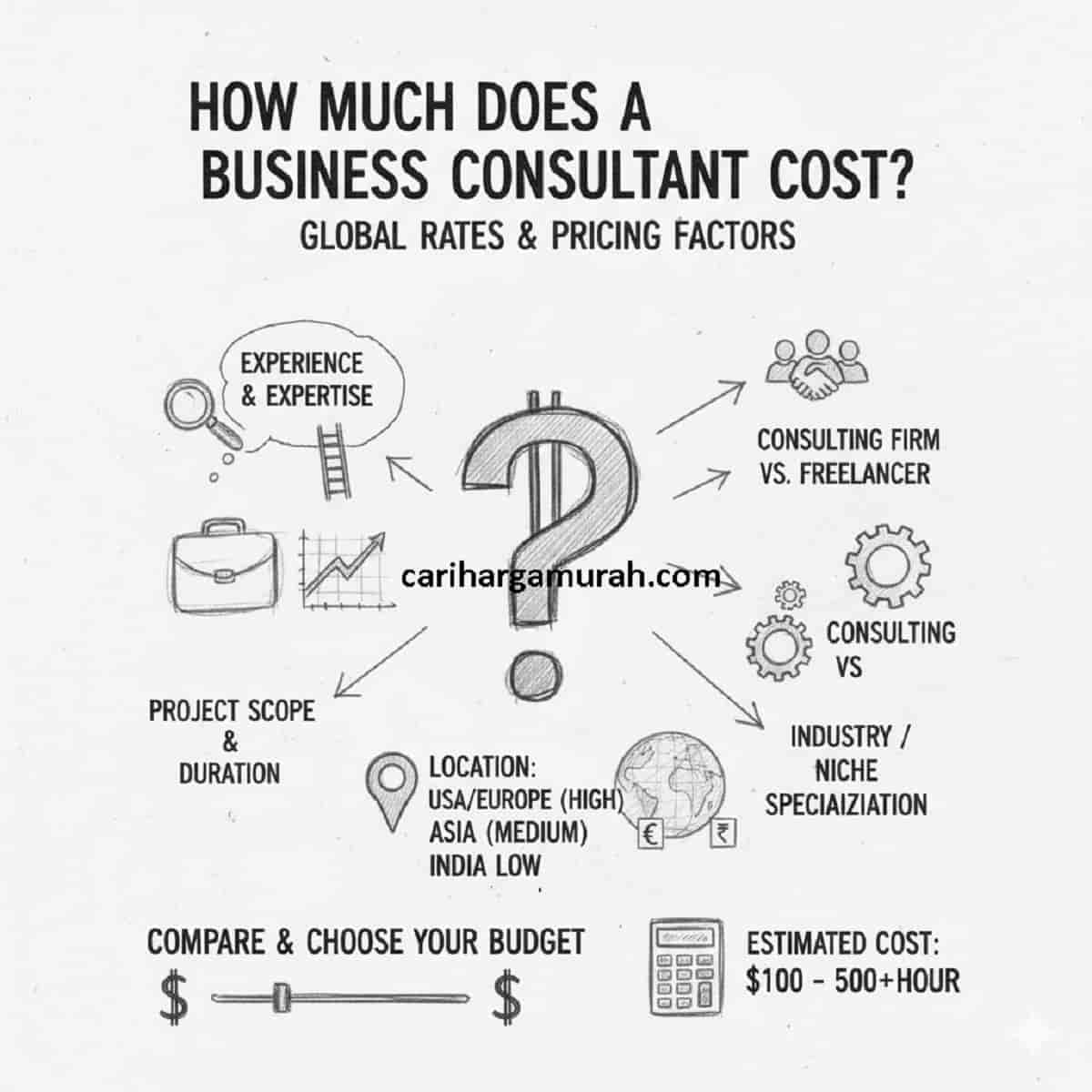
Hiring a business consultant can be a valuable investment for companies seeking strategic guidance, operational improvements, or growth planning. However, one of the most common questions businesses ask before engaging a consultant is simple but important: how much does a business consultant actually cost?
Business consulting fees vary widely depending on several factors, including location, expertise, industry focus, and the scope of work. Understanding these factors can help businesses set realistic expectations and compare options more effectively.
Average Cost of a Business Consultant
On a global scale, business consulting fees typically fall within the following ranges:
- Hourly rates: $50 – $300 per hour
- Daily rates: $400 – $2,500 per day
- Project-based fees: $1,500 – $50,000+ per project
- Monthly retainers: $2,000 – $15,000+ per month
These figures are general estimates. Actual costs may fall outside these ranges depending on the consultant and engagement type.
Business Consultant Pricing by Region
Location plays a major role in consulting fees due to differences in labor costs, market demand, and business environments.
United States & Canada
- Hourly rates: $100 – $300
- Project fees: $5,000 – $50,000+
Consultants in North America often charge premium rates, especially those with specialized expertise or experience working with large enterprises.
United Kingdom & Western Europe
- Hourly rates: $80 – $250
- Project fees: $4,000 – $40,000
Rates are slightly lower than in the US but still reflect strong regulatory environments and high professional standards.
Eastern Europe
- Hourly rates: $50 – $150
- Project fees: $2,000 – $20,000
Eastern Europe offers more affordable consulting options, particularly for operational and process-related consulting.
Asia (India, Southeast Asia)
- Hourly rates: $30 – $120
- Project fees: $1,500 – $15,000
Lower operating costs allow consultants in this region to offer competitive pricing, especially for SMEs and startups.
Australia & New Zealand
- Hourly rates: $90 – $250
- Project fees: $4,000 – $35,000
Pricing is comparable to Western Europe, particularly for strategic and management consulting services.



Business Consulting Costs by Company Size
The size of the business significantly affects consulting fees, as larger organizations typically require more complex analysis, stakeholder coordination, and longer engagement periods.
Small Businesses and Startups
- Typical cost: $50 – $150 per hour
- Project fees: $1,500 – $10,000
Small businesses usually engage consultants for short-term strategy, operational improvements, or early-stage planning.
Mid-Sized Companies
- Typical cost: $100 – $250 per hour
- Project fees: $5,000 – $30,000
Mid-sized companies often require structured frameworks, internal assessments, and implementation support, increasing overall costs.
Large Enterprises
- Typical cost: $200 – $500+ per hour
- Project fees: $20,000 – $100,000+
Enterprise consulting engagements often involve executive-level strategy, data analysis, and cross-department coordination.
Cost of Business Consulting by Type
Different consulting disciplines command different pricing levels.
Strategy Consulting
- $150 – $500 per hour
Focused on long-term growth, market entry, and executive decision-making.
Operations Consulting
- $80 – $250 per hour
Improving efficiency, workflows, and internal processes.
Financial & Risk Consulting
- $120 – $400 per hour
Often higher due to financial impact and regulatory considerations.
Marketing & Growth Consulting
- $75 – $300 per hour
Pricing varies based on data usage, tools, and campaign scope.
Startup & SME Advisory
- $50 – $200 per hour
Usually more flexible pricing for early-stage businesses.
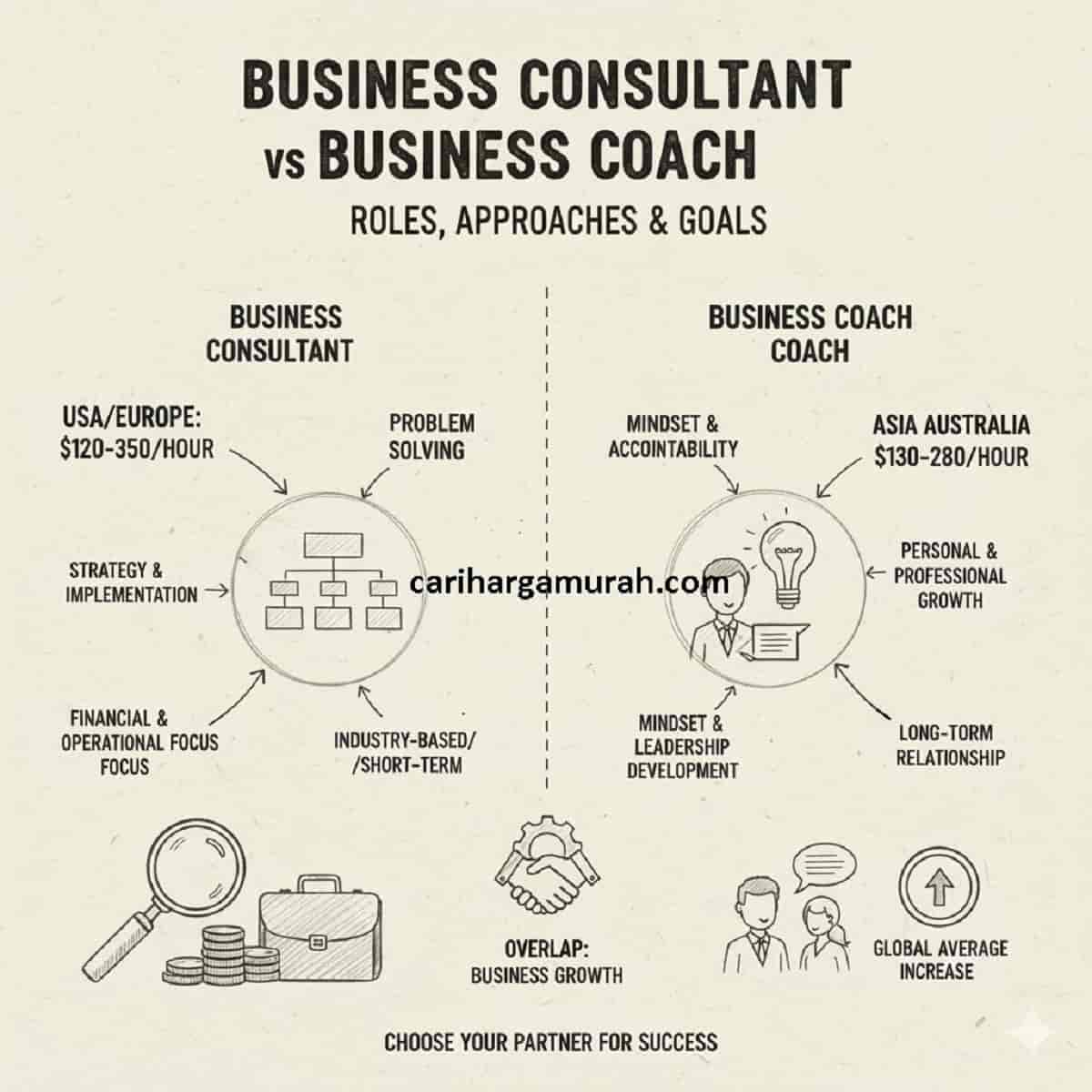
Business Consultant vs Business Coach vs Business Advisor: Cost Differences
Although the terms are often used interchangeably, business consultants, business coaches, and business advisors differ in approach and pricing.
Business Consultants
- Focus on analysis, strategy, and problem-solving
- Typical cost: $100 – $300 per hour
- Often hired for specific projects or transformations
Business Coaches
- Focus on mindset, leadership, and performance
- Typical cost: $75 – $250 per hour
- Often engaged on a recurring or session-based basis
Business Advisors
- Focus on guidance and experience-based insights
- Typical cost: $50 – $200 per hour
- Common among SMEs and startups
Understanding these differences helps businesses avoid overpaying for the wrong type of service.
Hidden Costs to Consider When Hiring a Business Consultant
Beyond the quoted fee, businesses should be aware of additional costs that may arise, including:
- Travel and accommodation expenses
- Extended implementation support
- Additional data collection or market research
- Software or tools required for analysis
- Follow-up consulting sessions
Clarifying these costs upfront helps avoid budget overruns.
Online vs On-Site Business Consulting: Cost Differences
Online Consulting
- Lower overall costs
- Reduced travel expenses
- Typical rates: 10–30% lower
On-Site Consulting
- Higher costs due to travel and time
- Often preferred for complex operations
- Typical rates: premium pricing
Remote consulting has expanded access to global expertise while making pricing more competitive.
Is a Business Consultant Worth the Cost?
Hiring a business consultant can be worth the investment when:
- The business faces complex challenges
- Internal expertise is limited
- Strategic decisions involve significant risk
However, for simple operational tasks, internal solutions or lower-cost advisors may be more appropriate.
The value of consulting lies not in the hours billed, but in the quality of insight delivered.
How Business Consulting Costs Translate Over Time
The true cost of business consulting should be evaluated over time rather than as a one-time expense. Effective consulting can lead to:
- Improved operational efficiency
- Reduced long-term costs
- Increased revenue or profitability
- Better decision-making frameworks
In many cases, the long-term financial impact outweighs the initial consulting fee, particularly for strategic or financial consulting engagements.
Factors That Affect Business Consulting Costs
Several variables influence how much a business consultant charges.
1. Consultant Experience and Reputation
Senior consultants with proven track records, industry recognition, or prior work with large organizations typically charge higher fees than junior or independent consultants.
2. Industry Specialization
Consultants specializing in niche industries such as finance, healthcare, or technology often command higher rates due to specialized knowledge and regulatory requirements.
3. Scope of Work
Projects with clearly defined deliverables may cost less than open-ended advisory engagements. Broader scopes require more time, research, and stakeholder involvement.
4. Engagement Duration
Short-term consultations may have higher hourly rates, while long-term projects or retainers often offer more cost efficiency over time.
5. Geographic Market
Local market conditions, cost of living, and demand for consulting services significantly influence pricing.
Common Business Consulting Pricing Models
Hourly Consulting
Best for short-term advice or specific problem-solving sessions. While flexible, hourly billing can become costly for longer engagements.
Project-Based Fees
A fixed price is agreed upon for a defined scope of work. This model offers cost predictability and is common for strategy development or business audits.
Monthly Retainers
Businesses pay a recurring monthly fee for ongoing advisory support. This model is often used by growing companies that need continuous guidance.
Performance-Based Fees
In some cases, consultants charge based on outcomes or performance metrics. While attractive, these arrangements usually involve higher baseline fees.
Consulting Fees by Contract Structure
Fixed-Scope Contracts
- Predictable pricing
- Suitable for defined outcomes
Time-and-Materials Contracts
- Flexible but less predictable
- Common for ongoing advisory
Retainer Agreements
- Lower effective hourly rates
- Long-term collaboration
Contract structure directly affects total consulting costs and risk exposure.
What Is Typically Included in the Cost?
Business consulting fees often cover:
- Business analysis and research
- Strategy development and recommendations
- Meetings and stakeholder discussions
- Reports and documentation
- Implementation guidance (depending on agreement)
However, additional costs such as travel expenses, specialized software, or extended implementation support may not be included unless explicitly stated.
When Paying More Makes Sense
Higher consulting fees may be justified when:
- The consultant has deep industry expertise
- The project involves high financial or strategic risk
- Regulatory compliance is involved
- Decisions have long-term business impact
In these cases, experience and reliability often outweigh lower upfront costs.
How to Compare Business Consulting Prices Effectively
To compare consulting options properly, businesses should:
- Review the scope of services, not just the price
- Understand deliverables and timelines
- Ask about prior experience in similar projects
- Clarify what is included and excluded from the fee
Lower prices do not always indicate better value, especially in strategic advisory roles.
How to Reduce Consulting Costs Strategically
Businesses can manage consulting expenses by:
- Defining clear objectives before engagement
- Limiting scope creep
- Preparing internal data in advance
- Choosing consultants with relevant specialization
- Using hybrid models (online + on-site)
Cost reduction should focus on efficiency, not cutting expertise.
Are Low-Cost Business Consultants Worth It?
Lower-priced consultants can be suitable for:
- Small businesses with limited budgets
- Operational or process-focused projects
- Short-term advisory needs
However, businesses should carefully evaluate credentials and communication quality before making a decision.
Red Flags to Watch for in Consulting Fees
Be cautious of consultants who:
- Refuse to define scope clearly
- Offer unusually low prices without justification
- Guarantee unrealistic outcomes
- Avoid transparency around deliverables
Pricing transparency is often a signal of professional credibility.
Real-World Business Consulting Cost Scenarios
Startup Strategy Project
- Duration: 4 weeks
- Cost: $3,000 – $8,000
Mid-Sized Company Process Optimization
- Duration: 2–3 months
- Cost: $15,000 – $40,000
Enterprise Market Expansion Strategy
- Duration: 3–6 months
- Cost: $50,000 – $150,000+
These examples illustrate how scope and complexity influence total cost.
Qualifications and Requirements to Become a Business Consultant
The requirements to become a business consultant vary by country and specialization. Unlike regulated professions such as law or accounting, business consulting is generally not governed by strict licensing requirements. However, qualifications and professional background significantly influence credibility, pricing, and client trust.
Education and Academic Background
Many business consultants hold degrees in fields such as business administration, management, finance, economics, or engineering. Advanced degrees such as an MBA or specialized master’s programs often strengthen a consultant’s positioning and justify higher fees.
While formal education is not always mandatory, it plays a role in shaping client perception, especially for strategic or executive-level consulting engagements.
Professional Experience
Experience is one of the strongest pricing drivers in business consulting. Consultants with:
- Senior management experience
- Corporate leadership backgrounds
- Experience working with large or international organizations
often command higher fees than consultants with limited practical exposure.
Clients are generally willing to pay more for consultants who have demonstrated real-world results rather than purely theoretical knowledge.
Industry Specialization
Specialized consultants, such as those focusing on healthcare, finance, technology, or regulated industries, usually charge higher fees. Specialized knowledge reduces risk for clients and shortens the learning curve, which directly affects pricing.
Generalist consultants tend to offer lower rates but may be less suitable for complex or high-stakes projects.
Certifications and Professional Credentials
Although not mandatory, certifications can enhance credibility and pricing potential. Common certifications include:
- Certified Management Consultant (CMC)
- Project Management Professional (PMP)
- Lean Six Sigma
- Industry-specific certifications
While certifications alone do not guarantee higher fees, they can support premium pricing when combined with relevant experience.
Legal and Business Requirements
In most countries, business consultants are required to:
- Register a legal business entity
- Comply with local tax regulations
- Carry professional liability insurance (recommended)
Consultants operating legally and transparently often charge more due to compliance costs and risk coverage.
Do These Requirements Affect Consulting Fees?
Yes. Qualifications and professional requirements have a direct impact on consulting fees.
Consultants with strong educational backgrounds, extensive experience, recognized certifications, and industry specialization generally charge higher rates. These factors reduce perceived risk for clients and increase confidence in the consultant’s ability to deliver results.
Conversely, consultants with fewer credentials or limited experience often compete on price, offering lower fees to attract clients. While this can be suitable for smaller projects, it may not be ideal for complex strategic engagements.
Why Clients Pay More for Qualified Consultants
Higher fees often reflect:
- Proven expertise and decision-making ability
- Lower implementation risk
- Faster problem identification
- Better strategic insight
In business consulting, the cost of poor advice can far exceed the consultant’s fee. As a result, many businesses prioritize qualifications and experience over the lowest price.
How This Impacts Price Comparison
When comparing business consulting prices, users should evaluate qualifications alongside cost. A higher-priced consultant may offer better long-term value if their background aligns closely with the project’s requirements.
CariHargaMurah.com encourages users to review both pricing information and consultant profiles to gain a more complete understanding before making contact.
How to Decide What a Fair Consulting Price Is
A fair consulting price should consider:
- Consultant qualifications
- Relevance to your industry
- Scope clarity
- Expected business impact
- Long-term value
Rather than seeking the lowest price, businesses should aim for the best alignment between expertise and objectives.
Conclusion
Business consulting costs vary widely based on region, expertise, and project scope. By understanding typical pricing ranges and the factors that influence fees, businesses can approach consultants with clearer expectations and make more informed decisions.
Rather than focusing solely on cost, businesses should consider value, experience, and relevance to their specific needs when hiring a business consultant.
FAQs
How much does a business consultant cost per hour?
Hourly rates typically range from $50 to $300, depending on expertise and region.
Do business consultants charge upfront fees?
Some consultants require upfront payments or deposits, especially for project-based work.
Are independent consultants cheaper than consulting firms?
In many cases, yes. Independent consultants usually have lower overhead costs.
Can consulting fees be negotiated?
Yes, especially for long-term or retainer-based engagements.
Why are some consultants extremely expensive?
High fees often reflect experience, specialization, risk exposure, and strategic impact.