
Updated July 29, 2026
Ford Motor reported its second-quarter results after the closing bell on July 28, and the numbers gave investors plenty to like, even with revenue coming in a bit below estimates.
Here’s what actually happened, broken down without the jargon.

What Did Ford Report for Q2 2026?
Ford posted adjusted earnings of 42 cents per share, beating the 35-cent estimate, though revenue slightly missed forecasts.
Automotive revenue came in at $44.89 billion versus the $45.86 billion analysts expected. Total revenue, including Ford’s financial arm, fell 4% year-over-year to $48.3 billion. The company also reported a net loss of $1.3 billion for the quarter, driven almost entirely by $4.2 billion in one-time charges tied to its pullback from all-electric vehicles, including a $3.6 billion restructuring of its BlueOval SK battery joint venture with SK On.
Despite that headline loss, the stock moved the opposite direction. Shares rose close to 7% after hours once investors saw past the one-time charges to the underlying operating performance and the improved outlook.
Why Did Ford Raise Its Full-Year Guidance?
Ford cited resilient vehicle pricing, a favorable mix of high-margin SUVs and trucks, and operational improvements across its core business.
The company now expects full-year adjusted earnings before interest and taxes of $10 billion to $11 billion, up from a prior range of $8.5 billion to $10.5 billion. It’s the second guidance raise of the year. Adjusted free cash flow guidance also moved up, to $6 billion to $7 billion from $5 billion to $6 billion, helped partly by an earlier-than-expected $500 million recovery tied to tariff reimbursements.
CEO Jim Farley pointed to something bigger than one good quarter, saying the results reflect Ford becoming a more disciplined and fundamentally different company. Strong sales of higher-margin models like the Bronco and Explorer helped offset weaker truck availability during the quarter.
| Metric | Q2 2026 Result | What Was Expected |
|---|---|---|
| Adjusted EPS | $0.42 | $0.35 |
| Automotive revenue | $44.89 billion | $45.86 billion |
| Full-year EBIT guidance | $10B – $11B | Previously $8.5B – $10.5B |
| Full-year free cash flow guidance | $6B – $7B | Previously $5B – $6B |
| After-hours stock move | +7% | — |
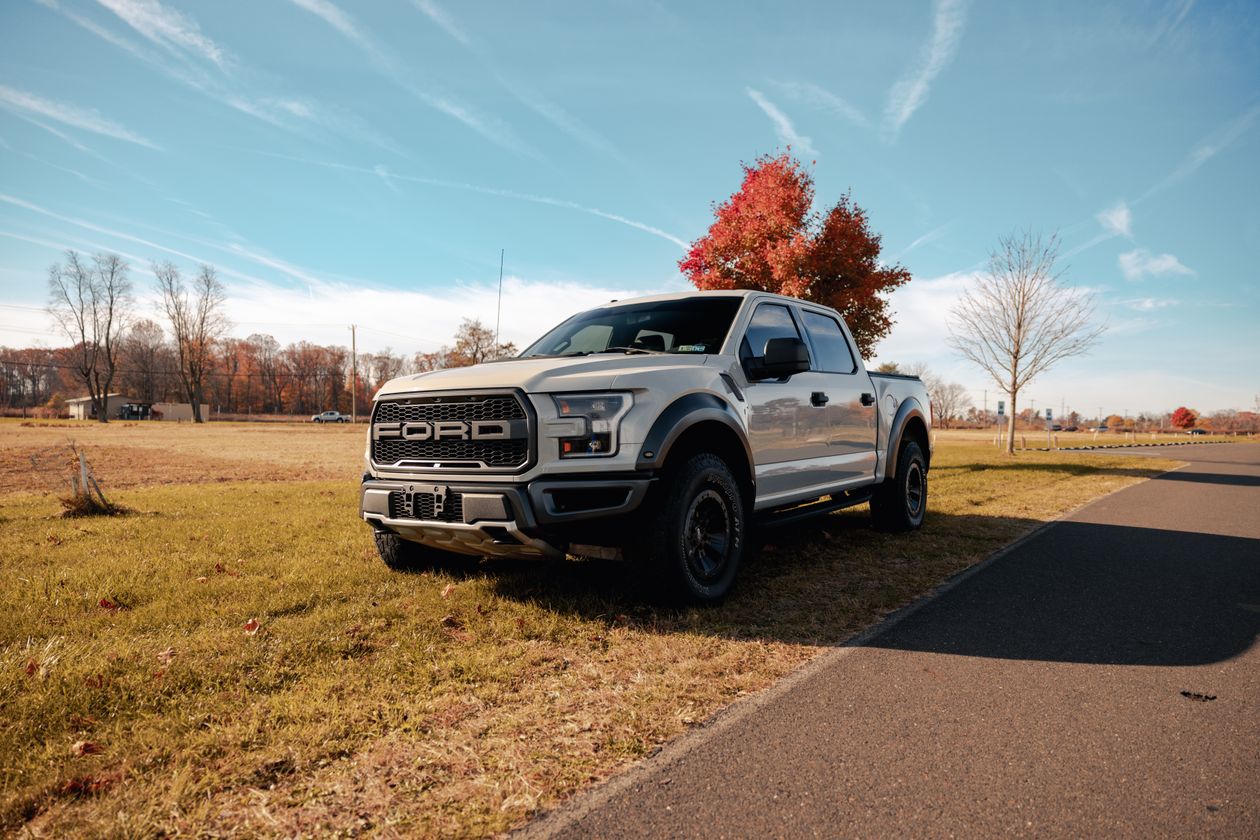
Is the F-Series Truck Problem Fixed Yet?
Not fully, but Ford says recovery is on track, expecting to win back about $2.5 billion of lost vehicle volume this year.
Ford’s F-Series production took a hit after Novelis, an aluminum supplier for its large trucks and SUVs, had two fires that crippled its supply chain. That impacted facility restarted production last month. CFO Sherry House said the company is “successfully navigating” the recovery and remains confident in a net $1 billion improvement in EBIT for 2026, weighted heavily toward the back half of the year. That said, the expected recovery landed at the lower end of Ford’s prior range, due to the specific mix of vehicles the company expects to build for the rest of the year.
The Bull Case
- Second guidance raise of the year shows real momentum
- Jefferies upgraded Ford to buy, calling Q2 a likely margin trough
- Strong pricing and a high-margin SUV mix are boosting profitability
- F-Series recovery still has room to run through year-end
The Bear Case
- Revenue still missed analyst expectations for the quarter
- Reported a $1.3 billion net loss due to EV-related charges
- Model e electric vehicle unit is still expected to lose about $4 billion this year
- Most analysts covering the stock rate it a hold, not a buy
How Does Ford’s Quarter Compare to GM and Tesla?
Ford’s move mirrors General Motors, which also raised guidance last week, while Tesla missed profit estimates and posted negative free cash flow.
GM’s second-quarter results set a high bar, with adjusted EBIT up 30% to $3.9 billion and North American margins improving to 8.6% even as sales dipped. GM raised its own 2026 profit forecast by $500 million, to a range of $14 billion to $16 billion. Ford, by comparison, trades at a higher earnings multiple than GM despite GM carrying the more bullish analyst consensus overall. Tesla told a different story entirely this quarter, missing profit forecasts and reporting negative free cash flow despite record vehicle deliveries.

Thinking about your next vehicle purchase while the market sorts through earnings season?
Browse Autos & Vehicles DealsWatch Out for Fake “Guaranteed Return” Stock Tips
- Be wary of unsolicited messages promising guaranteed profits on Ford or any stock
- Legitimate brokers never ask for account passwords or verification codes by text
- Earnings season is prime time for pump-and-dump schemes on social media
- This article is for informational purposes only and isn’t financial advice; consider talking to a licensed financial advisor before making investment decisions
Frequently Asked Questions
Did Ford beat earnings expectations in Q2 2026?
Yes. Ford reported adjusted earnings per share of 42 cents versus the 35 cents analysts expected, though automotive revenue came in slightly below forecasts.
Why did Ford stock jump after earnings?
Ford beat earnings estimates and raised its full-year guidance for the second time in 2026, citing strong pricing and a favorable sales mix, which sent shares up nearly 7% after hours.
What is Ford’s updated full-year guidance?
Ford now expects full-year adjusted EBIT of $10 billion to $11 billion, up from its prior range of $8.5 billion to $10.5 billion, along with higher free cash flow guidance.
Is Ford’s F-Series truck production back to normal?
Not entirely. Production is recovering after aluminum supplier Novelis had two fires that disrupted the supply chain, and Ford expects continued improvement through the second half of 2026.
Bottom Line
Ford’s second quarter tells a story of a company leaning into pricing discipline and a higher-margin product mix while still working through the pain of its EV pullback. The market clearly liked what it saw, with shares jumping nearly 7% and a second guidance raise in as many quarters. Whether that momentum holds through the rest of the year likely comes down to how cleanly the F-Series recovery finishes and whether pricing strength sticks around. As always, this is a summary of what was reported, not investment advice, so weigh it against your own research or a financial advisor’s input before making any decisions.
Stay on top of the next big auto industry earnings report before it breaks.
See More Trending Auto NewsSources: CNBC, with additional reporting from The Globe and Mail, Yahoo Finance, TTNews, and CNBC’s coverage of Jefferies’ analyst upgrade, as of July 27-28, 2026.